
7 November 2026
Slipped, Cracked And Missing Roof Tiles In Dartford: Causes And What A Repair Costs
Slipped, cracked or missing roof tiles in Dartford: why they come loose on each type of house, what you can check yourself, how they're refixed and 2026 prices.
It usually starts with a bit of grey or red tile on the drive after a windy night, or one tile sitting a finger’s width lower than its neighbours when you look up from the garden. Slipped, cracked and missing roof tiles are the most common repair we’re asked to price in Dartford, and that fragment on the drive tells you more than you’d think. It says what your roof is made of, which narrows down why the tile came loose and what the fix will cost. On most houses round here a tile repair reached from a roof ladder costs £180 to £450 in 2026, VAT included, and scaffold adds £500 to £1,200 where it’s needed. This guide goes through the causes house by house, what you can safely check yourself, how a roofer should refix tiles under BS 5534, and when a few loose tiles are really a sign of something bigger.
Slipped, cracked and missing roof tiles in Dartford: read the piece that came down
Pick the fragment up and look at it before you throw it in the bin. Its material, thickness and shape point straight at the type of roof you’ve got.
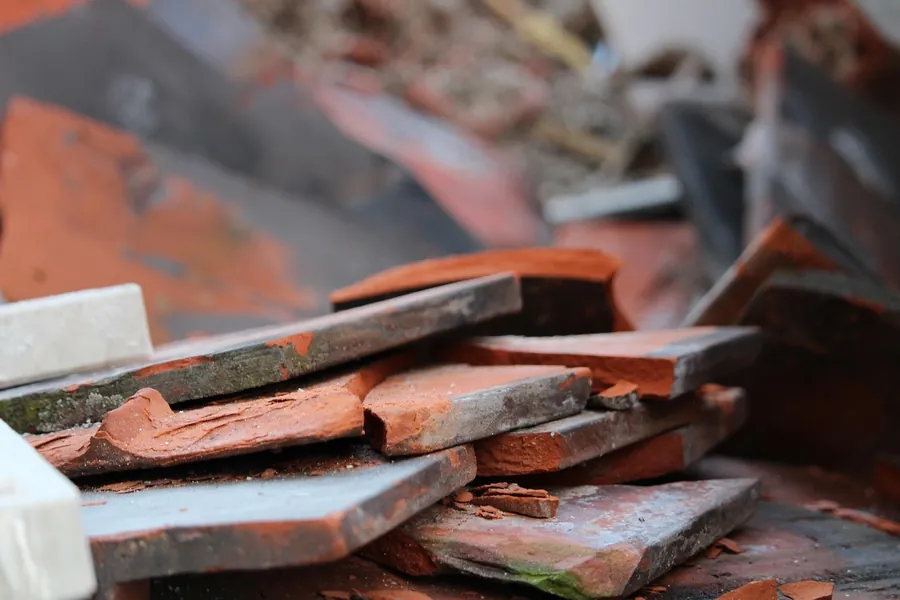
A thick, gritty piece with a sandy texture on the broken edge is concrete. Concrete interlocking tiles are large, around 40cm long, with grooves down the sides that lock into the next tile. They went onto a huge number of postwar roofs in Dartford, including the Temple Hill council estate, whose first phase opened in 1947. A thin, smooth, rust-red piece about 1cm thick is a clay plain tile, the small double-lapped tile found on many 1930s semis round Dartford Heath, Princes Road and Wilmington. A flat, dark, layered sliver that splits along its face is natural slate, which points to a Victorian or Edwardian house, most likely one of the terraces close to the town centre. And if what’s on the lawn is plastic, it’s probably a dry verge cap from a newer house rather than a tile at all.
Knowing which one you’ve got saves a lot of guesswork when you ring a roofer. Our roof repairs service in Dartford starts with a visit and photos of the slope, but telling us “it’s a thin red tile” or “it’s half a slate” lets us bring the right replacement on the first trip.
Why tiles slip on Dartford roofs
A tile slips when whatever was holding it gives up. What that is depends on the roof’s age.
On slate, it’s almost always the nails. Victorian roofers used iron nails, and after a hundred years or so they rust through at the batten. The slate stays whole but slides down out of its course, often after a frost or a gale gives it a nudge. Roofers call this nail sickness, and the tell is a slate sitting lower than the rest with nothing visibly wrong with it.
Clay plain tiles aren’t usually nailed one by one. They hang on the batten by two small nibs on the back, and on older roofs often only every fourth or fifth course got nails. If a nib snaps, or the batten behind it has gone soft, the tile drops. On a 1930s semi the battens can be ninety years old, so when tiles start slipping in several places at once it’s often the timber that’s failed, not the tiles.
Concrete tiles hang on nibs too, and many from the 1950s to the 1970s were laid with very few nails or clips. They’re heavy, which helps, but wind is their enemy. Dartford sits on the Thames, and the open marshes north of Temple Hill and Stone give a south-westerly gale a long run at the rooftops. Wind blowing across a roof sucks upwards on the tiles rather than pushing them down, so an unfixed tile at the edge of a slope can be lifted, shifted sideways and dropped out of line in one gust.
Newer houses round Ebbsfleet, Stone and Greenhithe were built with clips on their tiles, so slipping should be rarer. When it happens there, look for a missing clip, or a tile disturbed when an aerial, a satellite dish or solar panel brackets went in.
How tiles crack: feet, frost and falling branches
A crack has a different story behind it from a slip. Work out the cause and you’ll know whether the tiles next to it are likely to follow.

Feet are the biggest one. Concrete and clay tiles are strong when they’re lying flat and supported, but a person’s weight on the unsupported middle of a tile can snap it. We often find a neat line of cracked tiles leading to a satellite dish, an aerial bracket or a set of solar panels, left by someone who walked up the slope rather than using a roof ladder. The cracks may not show for months, until water gets in and frost opens them up.
Frost is the second. Older clay tiles take on a little water, and when that freezes it can flake the face off or split the tile in layers. Roofers call this spalling. A few spalled tiles on the north slope is normal on a 1930s roof. Spalling all over means the clay is at the end of its life.
Then there are trees. Plenty of houses in Joyden’s Wood back straight onto woodland, and gardens along the edge of Dartford Heath have big trees of their own. A branch coming down in a gale can crack tiles in a line all the way down the slope. That’s damage from a single event, which matters if you’re thinking about insurance.
What you can check yourself, and where to stop
You can learn a lot from the ground and the loft without ever going near a ladder.
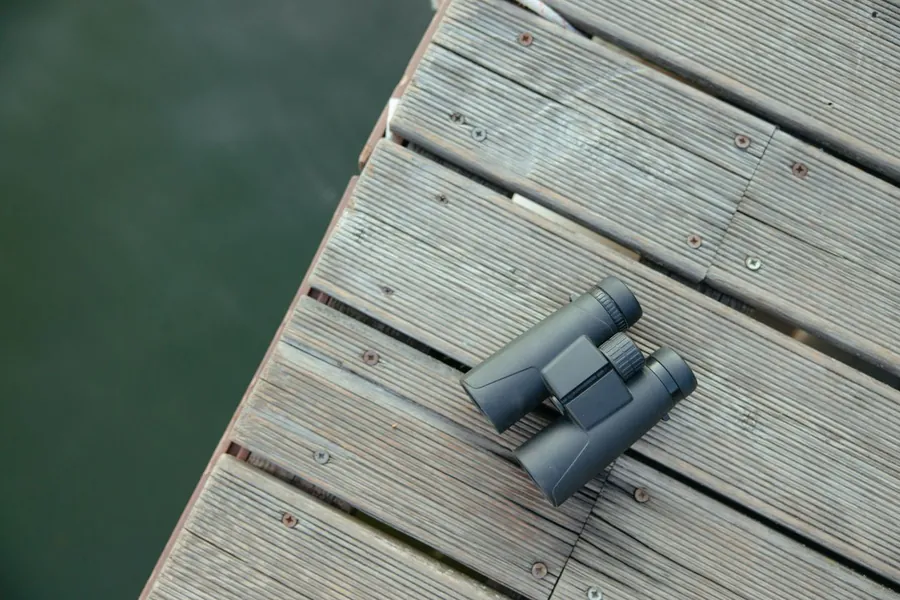
From outside, stand back across the road or at the far end of the garden. Use binoculars or your phone’s zoom. Look for any tile or slate sitting lower than its row, a gap showing the black felt or bare timber underneath, a paler patch where a tile has moved and exposed less weathered surface, and pieces in the gutter. Take photos while you’re at it. They’ll help a roofer quote, and if it turns out to be storm damage your insurer will want them.
In the loft, on a dry day, switch the light off and look up with a torch in your hand. Daylight showing through the roof means a tile or slate is out. On a roof with felt, check the felt under any suspect spot for damp stains or sagging. On an older roof without felt, look for wet patches on the battens and rafters. Upstairs ceilings tell their own story: a brown ring in a bedroom ceiling near the wall often sits under a slipped tile low on the slope.
Stop there. Going up a ladder onto a roof is exactly where a small job turns into a hospital visit. The HSE’s guidance on safe use of ladders limits them to short, low-risk tasks, and climbing off the top of a ladder onto a wet tiled slope isn’t one. Pushing a tile back up from inside the loft looks tempting too, but it rarely seats properly, and you can crack the tiles above doing it.
Refixing slipped tiles: tingles, hooks, nails and clips under BS 5534
How a roofer puts a tile back depends on what it is and where it sits. A decent quote should say which method they’ll use.
Slates are refixed with a tingle, a strip of copper, lead or stainless steel nailed to the batten through the gap between the slates below. The slate slides back up into place and the end of the tingle is folded over its bottom edge to hold it. Some roofers prefer stainless slate hooks, which do the same job and are less visible. Either is fine for a few slates. A roof covered in tingles is a different matter, because once dozens have gone in it usually means the nails are failing across the whole slope.
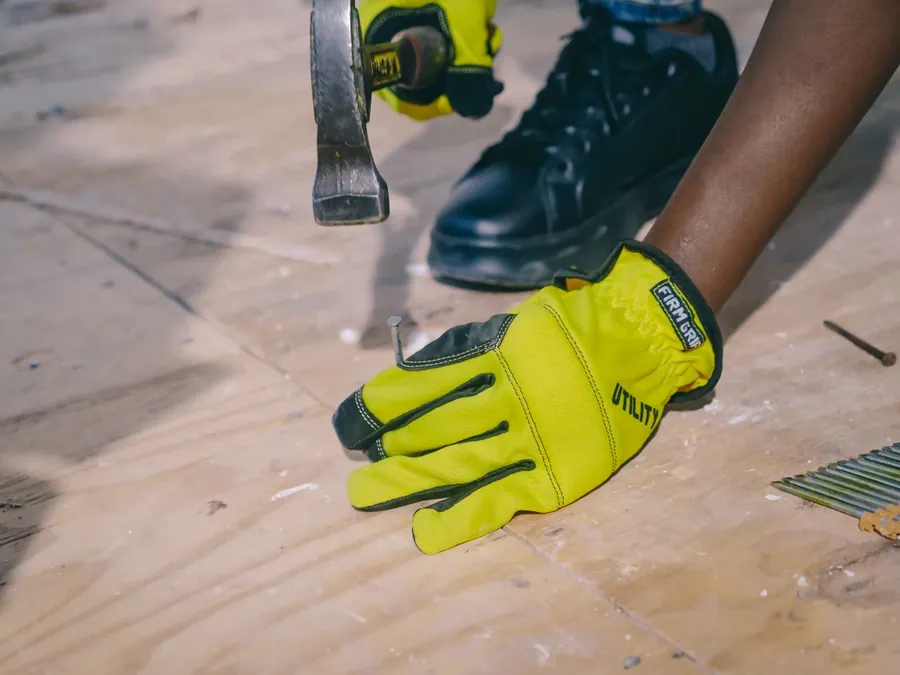
Plain and concrete tiles are easier. The roofer lifts the tiles above, hooks the slipped tile back onto its batten, and nails or clips it where they can get at it. If a batten has rotted or snapped, a short section can be spliced in, though if several have gone the job is bigger than a few tiles.
The fixing rules changed with the 2014 revision of BS 5534, the British Standard for slating and tiling. Marley’s summary of what BS 5534 requires spells it out: every single-lap tile, which covers concrete interlocking tiles, must be mechanically fixed with a clip, a nail or both, and mortar alone no longer counts. The 2018 amendment made clear that this applies to repairs, not just new roofs. There’s one practical catch. You can’t nail or clip a lone tile once the tiles round it are in place, so tile makers publish repair methods for that last tile, which may use an approved adhesive or a special clip. That’s acceptable. A tile simply stuck back with a blob of mastic is not. We covered the same standard’s rules for the top and edges of a roof in our guide to ridge tile and dry verge repairs in Dartford, since those are often what lets the first tile go.
Finding a match for a discontinued or weathered tile
Putting a tile back takes minutes. Finding one that matches can take days.
Most concrete tiles have the maker’s name and pattern cast into the underside, so a roofer will often lift one to check. Plenty of patterns from the 1960s and 70s are still made, but some have been dropped or changed shape slightly. An interlocking tile that doesn’t quite fit the grooves of its neighbours will let water through, however good it looks from the street. Colour is the other problem. A brand new brown or red concrete tile sits next to fifty years of weathering and moss and stands out clearly.
The neatest answer is usually to borrow from somewhere nobody looks. A roofer takes sound, weathered tiles from a rear slope, a garage roof or a lean-to, puts them in the visible gap, and fills the hidden spot with new ones. For clay plain tiles, reclamation yards in Kent and south-east London hold stocks of old handmade and machine-made tiles, though sizes vary and it can take a few calls to find a close match. Slate is easier, because reclaimed Welsh slate is fairly easy to get in the common sizes.
If your house is in one of Dartford’s six conservation areas, take more care. Dartford Borough Council lists them on its conservation areas page: Dartford Town Centre, Greenhithe, Southfleet, Hook Green, Church Hill in Wilmington and Red Street. A like-for-like tile repair doesn’t need consent, but patching an old slate or clay roof with a mismatched modern tile can spoil the look the designation is there to protect, and on a listed building it may need consent.
Storm or wear and tear: will insurance help?
Is a few slipped tiles worth a claim? That comes down to why they moved, and most of the time the honest answer is no.

Home insurance covers sudden damage from a specific event, like a storm or a falling branch. It doesn’t cover tiles that crept out of line because their nails rusted or their nibs broke over the years. That’s wear and tear, and the repairs above are mostly wear and tear. A loss adjuster can usually tell from the rust on the nails and the dirt under the tile how long it’s been out of place.
We’ve written a separate guide to storm damage and roof insurance in Dartford, covering what a storm means on paper and how to build a claim. The short version for tiles: photograph everything, keep the broken pieces, and get a dated report. Then check the quote against your excess, because a £300 tile repair under a £250 excess is rarely worth a claim on your record.
What a slipped or missing roof tile repair costs in Dartford in 2026
These are the prices we’re working to on Dartford tile repairs this year, VAT included. Your quote may land either side, mostly because of access.

| Job | Typical 2026 price (inc. VAT) |
|---|---|
| Re-seat and clip one or two concrete tiles, ladder access | £180 - £300 |
| Replace a cracked tile with a matching one | £180 - £350 |
| Refix a handful of slates on tingles or hooks | £200 - £450 |
| Clay plain tiles with a reclaimed match sourced | £250 - £450 |
| Emergency make-safe and tarp after a storm | £200 - £500 |
| Scaffold or tower where a ladder isn’t safe | add £500 - £1,200 |
Access moves the price more than anything else. A tile low on the back slope of a Joyden’s Wood bungalow can be done from a roof ladder in an hour. The same tile at the top of the front slope of a three-storey Victorian terrace needs scaffold, and on a pavement that means a highway licence from Kent County Council as well. Tiles above a conservatory are awkward too, because nobody can lean a ladder on polycarbonate or glass.
Based on the tile repairs we price around Dartford, a lot of homeowners ring about one loose tile and turn out to have three or four. That’s not a sales trick. When one tile goes the wind gets under the next one. Ask for photos of everything the roofer found, priced separately, so you can decide what to do now and what can wait.
If tiles are slipping across several slopes, the battens, nails or nibs are failing across the roof, and patching will only buy time. At that point a partial or full re-roof starts to make more sense, and our roofing costs page has the 2026 figures for that.
Get a free quote for slipped or missing roof tiles in Dartford
Frequently asked questions
Is one slipped roof tile urgent?
Not usually an emergency, but don't leave it for months. One tile out of line lets rain onto the felt or straight onto the batten below, and on a roof with no felt it can drip into the loft within a few wet days. Get it looked at within a week or two, sooner if there's a gap you can see sky through or a damp patch on a ceiling.
How much does it cost to put back a few slipped tiles in Dartford?
Where a roofer can reach them from a roof ladder, most small tile repairs come in between £180 and £450 including VAT. If the tiles are on the street side of a three-storey terrace or above a conservatory, add scaffold or a tower, which is usually another £500 to £1,200.
Can a roofer still just glue a tile back in?
For one isolated tile in the middle of a slope, sometimes. BS 5534 expects tiles to be mechanically fixed, but you can't nail or clip a single tile once the tiles round it are in place, so manufacturers publish repair methods that may use an approved adhesive or a special repair clip for that last tile. A run of mastic or mortar holding up several loose tiles is a bodge, not a repair.
Will my insurer pay for slipped roof tiles?
Only if a specific event, usually a storm, knocked sound tiles out of place. Tiles that slid because their nails rusted or their nibs crumbled over the years count as wear and tear, which home insurance excludes. Photos and a dated roofer's report make the difference either way.
Want a Dartford roofer to look at yours?
A roofer will come out, check it from the loft and the outside, and give you a written price. Dartford, Crayford, Bexley, Swanley and nearby.