
28 October 2026
Ridge Tile And Dry Verge Repairs In Dartford: Re-Bed, Dry-Fix Or Replace?
Ridge tile and dry verge repairs in Dartford: why the mortar fails, what to spot from the ground, re-bed vs dry-fix, BS 5534 fixing rules and 2026 prices.
Ridge tile and dry verge repairs in Dartford pile up every time a proper south-westerly comes up the estuary. The ridge is the row of capping tiles along the top of your roof. The verge is the edge where the tiles stop at a gable wall. They’re the two most exposed lines on any house, and on most homes here built before about 2000 both were finished in sand and cement. That mortar holds out for a few decades, then cracks, and once the wind gets underneath a ridge tile it can lift it straight off. In 2026, re-bedding or dry-fixing a full terrace ridge in Dartford typically costs £450 to £1,200, and a dry verge kit on one gable £350 to £900, VAT included. Since the 2014 revision of BS 5534, mortar on its own no longer counts as holding a ridge tile down. Below we cover why these edges fail, what you can spot without a ladder, and which repair fits which kind of Dartford house.
Ridge tile and dry verge repairs in Dartford: what these two edges actually do
Where two roof slopes meet at the top, there’s a gap running the length of the house. The ridge tiles cap it. At a gable end, the last tile in each row would otherwise sit open to rain blowing along the wall, so the verge closes it off. Hips, the sloping ridges on a hipped roof, do the same job as the ridge and fail in much the same way.
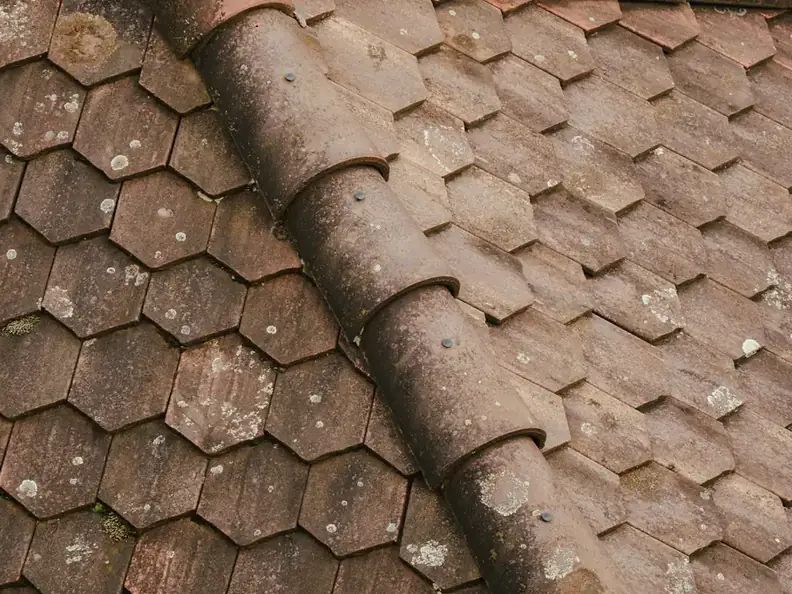
Older roofs finished both edges in mortar. Ridge tiles were laid on a bed of sand and cement along each side. Verges were a strip of mortar pointed in over an undercloak, a narrow row of slate, tile or fibre cement board tucked under the tile ends. Newer roofs replaced that mortar with plastic and metal: a dry ridge kit with a breathable roll under the tiles and screws holding each one, and dry verge caps that clip over the end of every course.
Neither is a big job next to re-tiling a whole slope. Both are a routine part of our roof repair work across Dartford. The difference is what happens if you leave them. A loose ridge is one of the few roof faults that can end up on someone’s head.
Why ridge and verge mortar gives up
Mortar on a roof has nowhere to hide. It sits on the highest, most exposed line of the house, bakes in July and takes the coldest wind in January. Four things wear it down, and they rarely act alone.

Age
Sand and cement shrinks as it cures and keeps drying out for years afterwards. By the time a mortar ridge is in its thirties, there are usually hairline cracks along the bed and the face pointing has started to come away in crumbs. Plenty of the 1930s ridges in Dartford have been re-bedded at least once already, and those repairs are now ageing too.
Frost
Rain soaks into those cracks. When it freezes, it expands and pushes them wider, and every thaw lets a little more water in. Dartford gets fewer hard frosts than most of England, but a wet autumn followed by a cold snap still does real damage to a ridge that was already cracked.
Movement
Roofs aren’t still. Rafters swell and shrink with the seasons, and a long ridge flexes slightly in strong wind. Rigid mortar can’t follow that movement, so it breaks along the line where it meets the tile. On a terrace, the ridge often crosses a party wall where one house has settled a bit more than its neighbour, and the bedding there tends to go first.
Cement-rich mixes
A lot of repair work from the 1970s onwards used a strong, cement-heavy mix on the theory that harder means longer-lasting. It doesn’t. Strong mortar is brittle and shrinks more as it sets, and it often grips the tile better than the tile grips the roof. When it fails, the whole bed can come away in one lump with the ridge tile still attached. On Victorian slate roofs originally finished in softer lime mortar, a hard cement patch can also hold water against the slate instead of letting it dry out.
What a failing ridge or verge looks like from the ground
You don’t need to go up anything to get a decent idea. Cross the road for the front slope, or stand at the bottom of the garden for the back, and look along the top of the roof.

What to look for:
- Gaps between ridge tiles, or a strip of shadow underneath them where the bedding has dropped out
- A ridge line that wanders, with one tile sitting higher, lower or skewed compared with the rest
- Grey lumps of mortar in the gutter, on a porch roof or scattered across the patio
- Missing verge pointing, showing the dark undercloak behind
- On newer houses, verge caps that have slid down, cracked, faded to a chalky grey, or gone missing so a tile end sits exposed
- In the loft after rain, damp patches on the tops of the rafters near the ridge board or along the gable wall
On a terrace, check next door’s roof while you’re looking. Ridges often run straight through from house to house, and a section one neighbour had redone in the 1990s may be fine while the original lengths either side are falling apart.
Re-bedding in mortar or switching to dry-fix: your ridge and verge options
Once a ridge or verge is coming loose, there are two honest ways to put it right. Which one suits depends on the house, the tiles and how much the look matters to you.

Re-bedding in mortar, with mechanical fixings
The ridge tiles come off and get cleaned of old mortar, along with the top of the roof. They’re then relaid on a fresh bed. Done properly today, every tile also gets a mechanical fixing, usually a stainless screw and sealing washer through the tile into a timber ridge batten, or a purpose-made clip. The mortar becomes weatherproofing and appearance, not the thing holding the tile on. We’d mix it softer and more sand-rich than the hard repairs of the past. This approach suits older clay and slate roofs, and any house where a plastic edge would look out of place.
Dry ridge and dry verge systems
A dry ridge kit replaces the mortar with a ventilated roll laid along the top of the roof, a batten fixed on adjustable brackets, and clips and screws holding each ridge tile. There’s no mortar to crack, and the roll lets air out at the highest point, which can help a loft that suffers from condensation. A dry verge swaps the mortar strip at the gable for interlocking plastic caps fixed to the ends of the battens. Both go on quicker and need far less maintenance.
The catch is how they look on a period house, and the plastic itself. Cheaper verge caps fade and go brittle in sunlight over 15 to 25 years. The kits are also made to suit specific tile profiles, so the system has to match what’s on your roof rather than being whatever fits roughly.
What BS 5534 says about a new or replaced ridge
BS 5534 is the British Standard code of practice for slating and tiling pitched roofs. Its 2014 revision changed the rules on ridges. The grip between mortar and tile can no longer be counted on to resist wind uplift, so ridge and hip tiles need a mechanical fixing whether or not they’re bedded in mortar.

The current edition, BS 5534:2014+A2:2018 from BSI, was published in February 2018 and applied from July that year. Its scope covers normal re-roofing work, repairs included, not only new houses. It also brought in BS 8612 for dry-fixed ridge, hip and verge systems, so a dry kit should be one tested to that standard. Marley’s summary of what changed in the 2018 amendment notes one exception. Small “baby” ridge and hip tiles on low details such as bays and porches, no more than 3m up, may still be bedded in mortar alone if their own weight is enough to resist the wind.
There are two catches. BS 5534 is a code of practice rather than a law, but building control, warranty providers and insurers all lean on it, so a quote that just says “re-point ridge” with no mention of fixings falls short of it. And the standard itself accepts that its recommendations may not suit older roofs, especially historic ones, where it suggests talking to the local planning authority or a conservation body first. Here, that’s Dartford Borough Council.
How ridge and verge repairs play out on Dartford’s houses
The decade a street went up tells you most of what you’ll find at the top of the roof.
Victorian and Edwardian terraces near the town centre
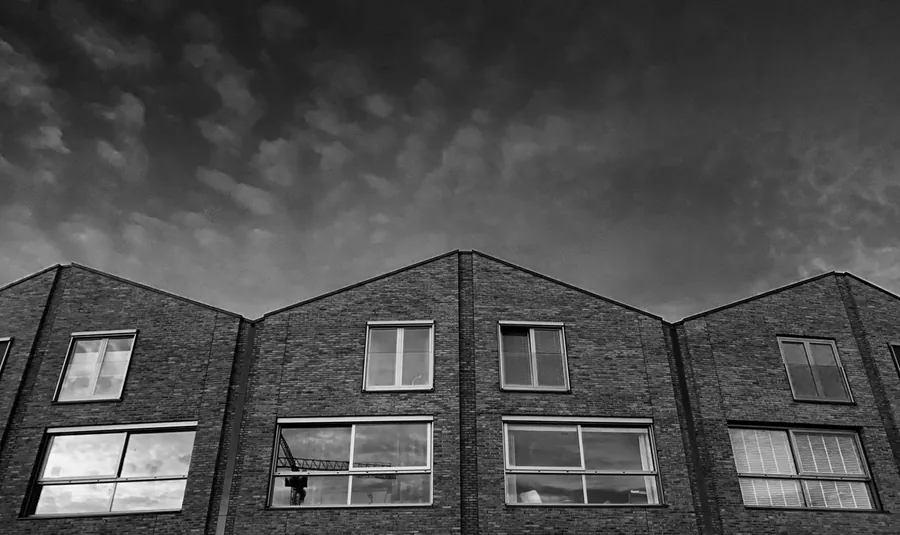
These are mostly Welsh slate or clay, with clay or slate ridges laid in mortar, often one continuous line across four or five houses. Many have been patched over the years with hard cement, sometimes several times. If the house is inside the Dartford Town Centre conservation area, keeping the look matters: a mortar-bedded ridge with hidden fixings rather than a plastic dry ridge. The council lists the borough’s six conservation areas in Dartford, including the town centre, Greenhithe village and Church Hill in Wilmington.
Interwar semis in Wilmington, Joyden’s Wood and off Princes Road
The typical 1930s semi has a hipped roof, so instead of one ridge there’s a short ridge plus two or three long hips, all bedded in mortar. That’s more metres of bedding per house than a terrace has, and more places for it to fail. Joyden’s Wood has plenty of bungalows too, with low hips that can often be reached without scaffold. Bay roofs on these houses may carry the small ridge tiles that the standard still allows in mortar alone.
The riverside estates: The Bridge and Ingress Park
Building on these began around 2000, in the years after Bluewater opened in 1999. Many of the houses went up with dry ridges and dry verges from the start, which means that kit is now past 20 years old. Faded, brittle caps, screws that have worked loose and a cap or two lost in each gale are the usual finds. Most of the time it’s a straight swap for a current BS 8612 system. We go through the wider checks for these houses in our post on new-build roofs once the NHBC cover ends.
Access, scaffold and ridge and verge repair costs in Dartford
The ridge is the highest point of the house, so how a roofer reaches it moves the price more than the mortar or plastic does.
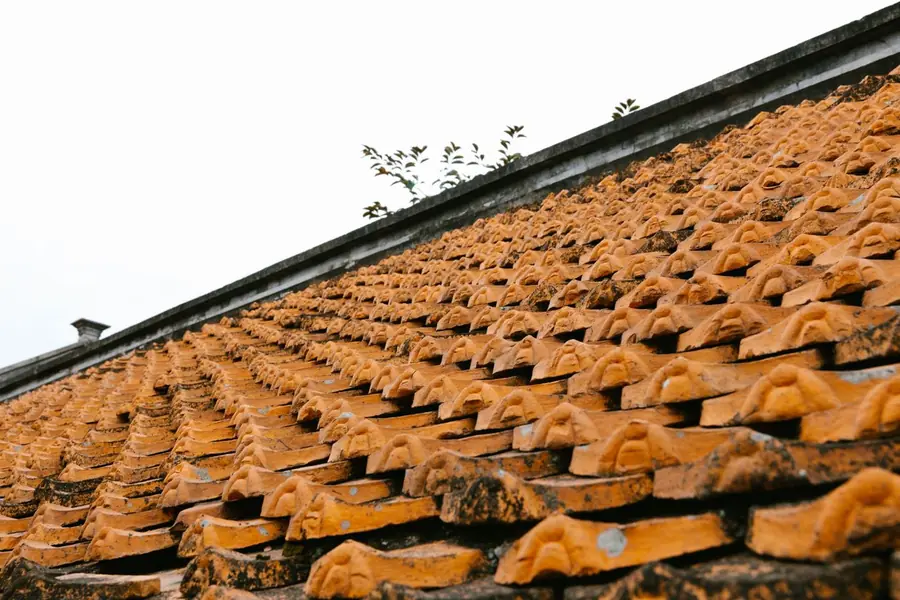
On a two-storey semi with room at the side, a ridge can often be reached with a roof ladder hooked over the top, working up from a tower or ladder at the eaves. Verges are trickier, since the work happens right on the edge of the roof, and a tower at the gable end is often the safe minimum. A three-storey terrace front, or a gable sitting above a neighbour’s single-storey extension, usually means scaffold. If that scaffold stands on the pavement, the scaffolder needs a licence from Kent County Council, and that cost ends up on your quote.
Here’s what we’re quoting for this work in 2026, VAT included:
| Job | Typical price (inc. VAT) |
|---|---|
| Re-bed one or two loose ridge tiles | £180 - £350 |
| Re-bed or dry-fix a full terrace ridge | £450 - £1,200 |
| Dry verge kit on a typical gable | £350 - £900 |
| Make-safe after a gale, loose ridge lifted down | £200 - £500 |
| Scaffold for a front ridge on a terrace | £500 - £1,200 |
Hips and mortar verges on bigger hipped roofs are priced once we’ve seen them, because the length varies so much from house to house. These figures sit in line with our wider guide to roof repair costs in Dartford. Whoever does the work should also clear the old mortar out of your gutters before they leave. If it’s still sitting there a week later, blocking a downpipe, you’ve learned something about the firm.
Frequently asked questions
Can a roofer just re-point my ridge?
They can, but it rarely lasts. Fresh pointing over a bed that has already let go of the tile only hides the problem, and the next strong gust lifts the tile anyway. If the ridge tiles rock when pressed, they need lifting, cleaning off and relaying with a mechanical fixing on each one, either in new mortar or with a dry ridge kit.
Do I have to switch to a dry ridge when my ridge is repaired?
No. Mortar can still be used to bed ridge tiles, as long as every tile is also screwed or clipped down so the mortar isn't what holds it on. On an older house, and particularly inside one of Dartford's conservation areas, a mortar finish with hidden fixings often looks better than a plastic dry ridge.
How much does a dry verge cost on a Dartford new build?
For a typical gable we'd expect £350 to £900 including VAT. Swapping a handful of broken caps comes in under that. It costs more if scaffold is needed, or if the batten ends the caps fix into have rotted and need cutting back and replacing first.
Is a loose ridge tile an emergency?
If it has visibly moved, cracked in half or slid into the gutter, treat it as one. A ridge tile falling from the top of a two-storey house can do real harm. Keep people away from the area below on both sides of the roof and get it made safe. Our make-safe visits usually cost £200 to £500, with the proper repair priced separately.
Want a Dartford roofer to look at yours?
A roofer will come out, check it from the loft and the outside, and give you a written price. Dartford, Crayford, Bexley, Swanley and nearby.