
11 November 2026
Moss Removal And Roof Cleaning In Dartford: What Works, What Harms And 2026 Costs
Moss removal and roof cleaning in Dartford: why moss grows here, when it matters, scraping vs soft wash vs jet washing, coatings and 2026 prices.
Moss removal and roof cleaning in Dartford is usually sold as an urgent job. Most of the time it isn’t. Dartford gets roughly half the rain England averages, yet the rear slopes of plenty of houses here are green by November. That comes down to shade, trees and tiles that have worn porous, not to the weather. Some of that moss does cause trouble, mostly by blocking gutters and valleys. A lot of it is just untidy. In 2026, a hand scrape and biocide treatment on a mid-terrace in Dartford typically costs £350 to £700, and £450 to £950 on a semi, with scaffold adding £500 to £1,200 where it’s needed. Jet washing is cheaper and quicker, and it’s the method most likely to cost you more later. Below we go through why moss settles on the roofs it does, when it’s worth paying to shift it, which methods leave the tiles intact, and what coatings will and won’t do.
Why moss grows on Dartford roofs when it hardly rains
Moss doesn’t need much rain. It needs a surface that stays damp for long enough, and a bit of shade. In a dry summer it browns off and goes dormant, which is why a roof can look fine in August. Once the autumn dews start and the sun drops lower, it greens up again within weeks.
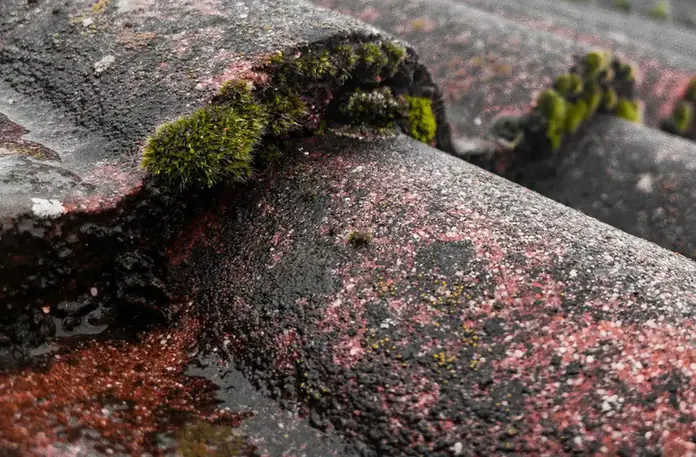
So the slopes that grow it in Dartford follow a pattern. North-facing slopes get almost no direct sun from October to March, and on a terrace that runs east to west, one whole side of the street faces that way. Then there are the trees. Houses backing onto Dartford Heath, and the 1930s semis near the edge of Joyden’s Wood, sit under canopy that drips on the roof for hours after a shower and drops leaf litter that rots into a seedbed. Chimney stacks and taller neighbouring roofs cast their own shade, which is why you’ll often see a neat green triangle on the tiles behind a stack.
Lichen is a different thing. Those flat grey, yellow and orange crusts are part fungus, part alga, and they grow very slowly. The bright orange one is common on roofs across north Kent and copes well with the nitrogen that comes off busy roads and farmland. It looks alarming on a pale tile but does far less than its colour suggests.
If you’re not sure whether what’s on your roof is cosmetic or covering something worse, a roof inspection in Dartford will tell you, with photos, before anyone quotes you to clean it.
Concrete interlocking tiles and clay plain tiles: where moss sits on each
The tile under the moss matters more than the moss. Dartford has two main types, and they hold growth in different places.
Concrete interlocking tiles
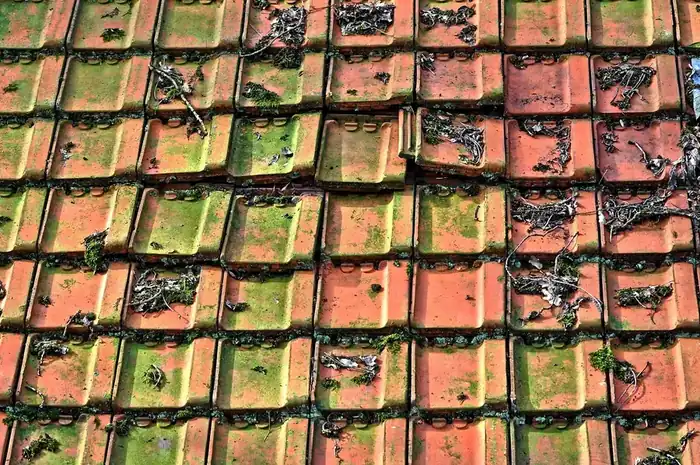
Large concrete tiles with a lock along one side cover most of Temple Hill’s postwar houses, most re-roofs from the 1960s onwards and nearly every new build at The Bridge and Ingress Park. When new, they have a smooth coloured skin. Over thirty or forty years that skin wears away, the surface turns sandy and the tile soaks up more water. That’s when moss arrives, and it arrives fast.
On these tiles, moss settles in the side lock and along the bottom edge where each tile overlaps the one below. A thick cushion there can bridge the channel that’s meant to carry rainwater down the slope. In heavy rain the water then tracks sideways over the lock and onto the felt. If an old concrete roof starts leaking in odd places after a wet spell, packed moss in the interlocks is one of the first things worth checking.
Clay plain tiles
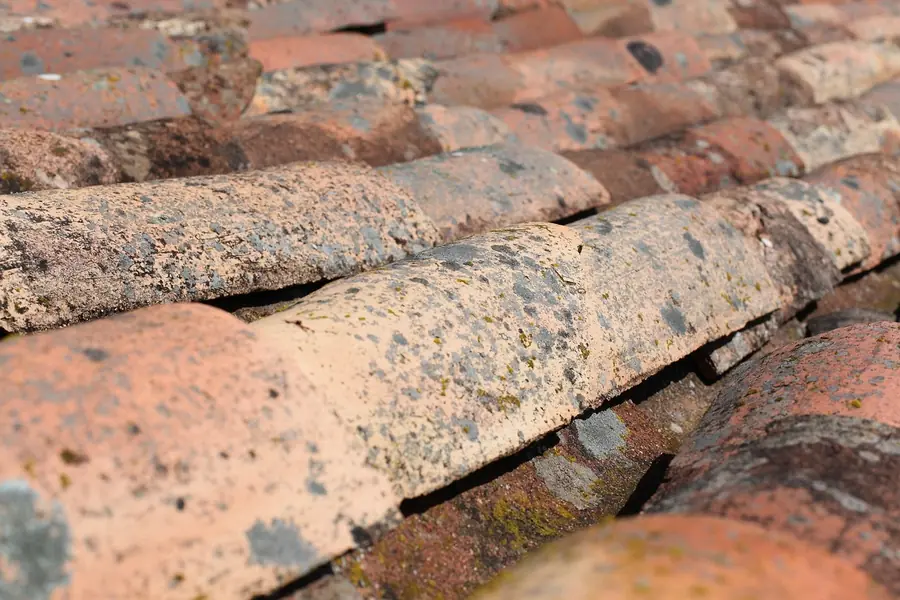
The small, flat clay tiles on the Victorian terraces around West Hill and on many interwar semis near Princes Road are laid double-lapped, so each tile covers two below it. There are a lot more joints, and moss grows along the lower edge of each one in neat green lines. Good clay is fairly dense, so growth is often thinner. Older, softer tiles are a different story, and an early 20th-century roof may already have tiles flaking at the face.
Plain tiles hang on small nibs and are only nailed every few courses. That makes them easy to knock loose with a scraper or a boot. If your roof is older, our guide to how long a roof lasts in Dartford by house age explains what to expect from each type.
Does moss actually damage a Dartford roof?
Less than the leaflets say. The Royal Horticultural Society’s guidance on algae, lichens and mosses on hard surfaces points out that these growths don’t damage the surface they sit on. That holds broadly for roof tiles too. Moss doesn’t eat into a tile.
The trouble is what it does around the tile. Clumps break off in wind, roll down the slope and pack into gutters, outlets and the swan necks at the top of downpipes. A gutter that overflows every time it rains soaks the fascia behind it and streaks the brickwork below.
Valleys suffer next. Where two slopes meet, moss and dead leaves gather in the channel and slow the water, and that’s a common start to a valley leak.
Then there’s the tile itself. On concrete that has already gone porous, a wet cushion of moss keeps it damp for days. Dartford gets fewer hard frosts than most of England, but one cold snap after a wet month can still flake the face off a saturated tile. A dense mat growing under the bottom edge of a tile can also raise it a few millimetres, which is enough for wind-driven rain to get in.
Lichen rarely matters. Scraping it off often does more harm to the tile’s surface than the lichen ever would. So decide on function, not looks. If your gutters run clear and the loft is dry, a mossy roof can usually wait.
Moss removal methods: hand scraping, soft wash and the trouble with jet washing
There are three ways to get moss off a roof. Two of them are fine. One isn’t.

Hand scraping and brushing
This is the slow, careful option. Someone works down the slope from a roof ladder or crawl boards with a scraper and a stiff brush, pushing the moss off the tiles and out of the laps. It removes the bulk in a day or two on most houses here. It won’t remove staining or lichen, and the roof will still look patchy. Anyone doing it on a two-storey house should be working to the HSE’s work at height guidance: proper access, edge protection or a tower, and no walking straight on old tiles.
Soft wash with a biocide
A moss and algae killer is sprayed on at low pressure, often after a scrape. It kills what’s left, including the roots in the laps, and the dead growth loosens and washes away over the following weeks and months. Lichen bleaches and drops off more slowly. Products sold for this are biocides, which are regulated in Great Britain, and the HSE’s biocides pages explain how they are authorised. Ask what product is being used and check it’s meant for roofs. Runoff goes straight into your gutters, so water butts should be disconnected and ponds and borders under the eaves covered.
Jet washing
A pressure washer clears a roof in an afternoon, which is why it’s cheap. It also strips what’s left of the coloured surface off concrete tiles, leaving them rougher and more porous, so the moss comes back sooner. On old clay it can blast the face off softer tiles. Worst of all, a jet aimed up the slope drives water under the laps and onto the felt and battens. Tile manufacturers advise against pressure washing, so don’t expect a tile guarantee to pay out for damage it causes. On a newer roof that’s still covered, read the terms before anyone points a lance at it.
Gutters, valleys and drains after the roof is cleaned
Every bit of moss that comes off the roof heads for the gutter. A cleaning job that stops at the eaves leaves you worse off than before, because the gutters are now packed full.
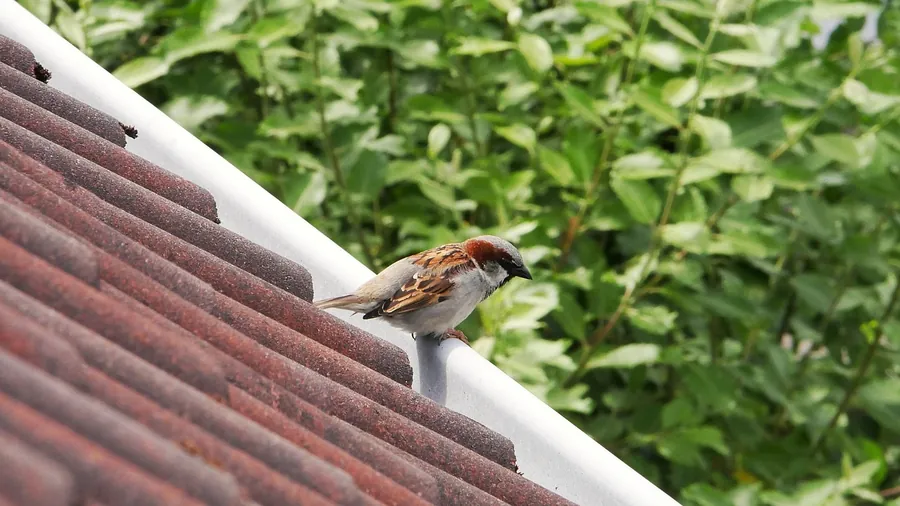
Clearing them should be part of the job, done at the end and again after the biocide has had a few months to work. That second clear catches the dead growth that rinses down over the winter. Check the outlets and the first bend of each downpipe too, because that’s where moss balls lodge. On a terrace, the gutter often runs across several houses, so the blockage that floods your wall might be next door’s.
Valleys need the same attention. On concrete-tiled roofs with a dry valley trough, moss packs into the narrow channel quickly. On older roofs with lead valleys, debris holds water against the lead. Our guttering, fascia and soffit service covers gutter clearing as well as repairs, and the gutter, fascia and soffit costs guide has prices if the gutters turn out to need more than a clear-out.
Roof coatings: what they can and can’t do
After a clean, you may be offered a coating. It’s usually a sprayed acrylic or resin finish over concrete tiles, sold as protection that keeps moss off and the roof looking new.
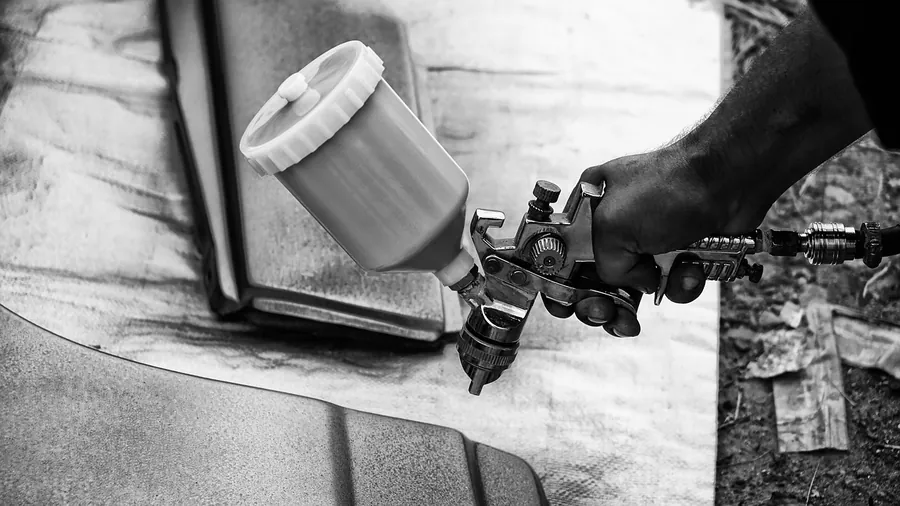
It does change how the roof looks, and some coatings slow moss for a few years. What a coating can’t do is mend anything. It won’t fix cracked tiles, re-secure slipped ones, replace perished felt or hold down a loose ridge. A tired concrete roof with a fresh coat is still a tired concrete roof, just harder for the next roofer to assess. If the coating seals the gaps between tiles, it can also trap moisture in the laps that should be able to dry out.
Ask three questions before agreeing to one:
- What happens to the tiles that are already cracked or loose? They should be replaced before anything goes on.
- What does the guarantee cover, and who stands behind it if the company stops trading?
- How will a future repair be matched? A replacement tile won’t match a coated slope.
Coating clay plain tiles is rarely sensible. It changes the character of an older roof, and on a listed building it’s the kind of alteration that’s likely to need listed building consent, so speak to Dartford Borough Council before anything goes on. For most roofs here, money spent on repairing the faults under the moss goes further than money spent on a coat.
Moss removal and roof cleaning costs in Dartford for 2026
These are guide figures for typical Dartford houses, VAT included, for a hand scrape and biocide treatment unless stated. Most of the town is terraces and semis (only about 7.5% of homes are detached), so most jobs sit in the first two rows.

| Job | Typical 2026 price |
|---|---|
| Mid-terrace, front and rear slopes | £350 - £700 |
| End-terrace or semi | £450 - £950 |
| Bungalow | £350 - £750 |
| Detached two-storey house | £800 - £1,600 |
| Biocide treatment only, no scrape | £200 - £450 |
| Gutter clear and flush afterwards | £90 - £240 |
| Coating over a cleaned semi | £2,500 - £5,000 |
| Scaffold or tower where ladders won’t do | add £500 - £1,200 |
Access sets most of the price. A bungalow with a level garden is quick. A three-storey townhouse on The Bridge, with a conservatory under one slope, isn’t. Tiles broken during cleaning should be replaced as part of the job, not added on afterwards, so ask how that’s handled before work starts.
If a quote arrives at your door unasked, take it with care. A cheap “while we’re in the area” roof clean often turns into a jet wash and a coating sale. Get the condition of the roof checked first, then decide whether the moss is the problem or just the most visible thing on it.
Frequently asked questions
Should I get the moss taken off my roof before I sell?
Only if it's blocking something. A buyer's surveyor will note heavy moss, but what they really look for is what's under it: cracked or slipped tiles, tired ridges, gutters full of debris. A roofer's report on the actual condition of the roof usually does more for a sale than a cleaned roof that still has the same faults.
How long does moss take to come back after a Dartford roof is cleaned?
On a shaded slope with worn concrete tiles, expect the first green patches within three to five years. A sunny slope on good tiles can stay clear for a lot longer. A follow-up biocide treatment every few years slows regrowth far more than a second scrape does.
Is it safe to clean my own roof?
From the ground, with a long-handled brush on a single-storey porch or garage, maybe. On a two-storey house, no. Falls from height are one of the most common causes of serious injury at home, and walking on old tiles breaks them. Work at that height needs roof ladders, crawl boards and edge protection or a scaffold tower.
Do zinc strips stop moss?
They help. A strip of zinc or copper along the ridge releases small amounts of metal each time it rains, which discourages growth on the tiles below it. The effect fades with distance from the strip, so the bottom courses of a long slope often still grow some moss. They won't do much on a slope that sits under trees.
Want a Dartford roofer to look at yours?
A roofer will come out, check it from the loft and the outside, and give you a written price. Dartford, Crayford, Bexley, Swanley and nearby.