
9 November 2026
Lead Flashing, Valley And Abutment Leaks In Dartford: Causes, Fixes And 2026 Costs
Lead flashing and valley leaks in Dartford: where the lead sits on local houses, why it fails, how to rule out condensation, repair options and 2026 prices.
The damp patch is nearly always in the same sort of place. It sits in the corner of a back bedroom where the extension roof meets the house, on the chimney breast, or along the cheek of a loft dormer. Lead flashing, valley and abutment leaks in Dartford follow the joins, and on a town where barely one home in thirteen is detached, there are a lot of joins. A Victorian terrace with a two-storey back addition has lead up the side of the addition, often in a valley where the two roofs meet, and round a shared stack as well. In 2026, refixing a short run of loose flashing usually costs us £150 to £350, new lead at an abutment £350 to £800, and a relined valley £600 to £1,600. This guide shows where the lead sits on each kind of Dartford house, the four reasons it gives up, how to tell a flashing leak from condensation or a slipped tile, and which repair is worth paying for.
Lead flashing, valleys and abutments on Dartford houses: where the lead actually is
Lead does one job on a pitched roof. It closes the gap wherever tiles stop against something that isn’t more tiles: a wall, a chimney, a dormer, or another slope coming in at an angle.
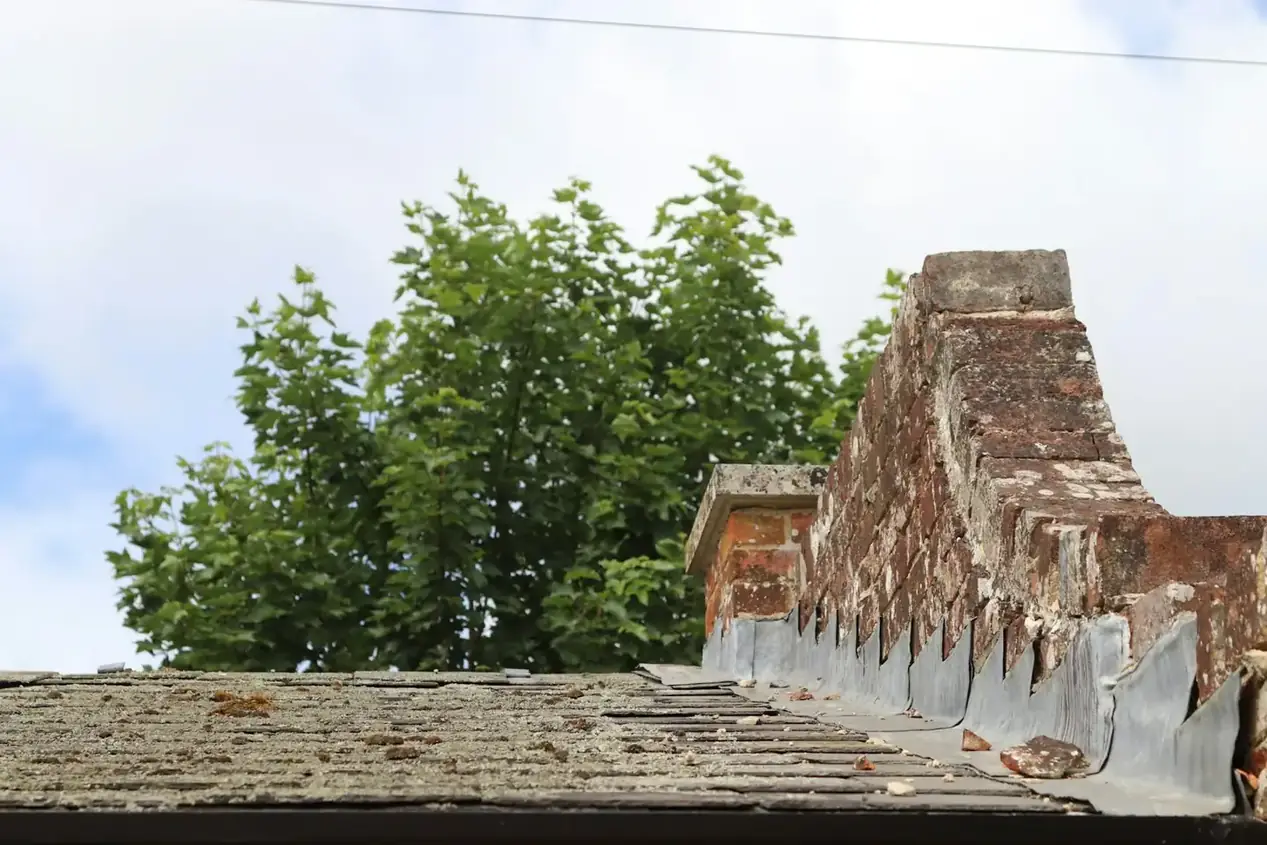
Which of those your house has depends mostly on when it was built. The Victorian and Edwardian terraces around the town centre, off Lowfield Street and up towards West Hill, have slate roofs, shared stacks and a back addition behind almost every house. That gives each one a stepped flashing up the side of the addition, often a valley where the addition’s roof runs into the main slope, and lead round the chimney. The 1930s semis along Princes Road, Shepherds Lane and the roads by Dartford Heath swap that for a hipped clay roof, a front bay with its own little roof or lead top, and in many cases a later loft dormer with lead down both cheeks. Postwar concrete-tiled houses on estates like Temple Hill have the least lead of all, often just an apron at the chimney and a flashing where a porch or garage meets the wall.
Knowing which joins your roof has makes the conversation with a roofer quicker. Our leadwork service in Dartford starts with a look at the leak from inside as well as out, because the stain on the ceiling and the fault on the roof aren’t always directly above one another.
Abutments: back additions, dormer cheeks and the chimney
An abutment is any spot where a sloping roof runs into a vertical wall. Two pieces of lead normally share the work there.

Under the tiles, small folded pieces called soakers sit between each course and turn up the wall. Over them, a stepped cover flashing is tucked into the brick joints and dressed down over the turned-up edges, so rain running down the wall lands on the tiles rather than behind them. On slate roofs the soakers do most of the work. On interlocking concrete tiles there’s usually a single cover flashing dressed over the tile profile instead. Either way, the vulnerable part is the top edge, where the lead goes into the mortar.
Back additions are where we see this most on Dartford terraces, because the side flashing is long, gets the afternoon sun and is often half hidden behind a neighbour’s addition. Dormer cheeks run a close second. A lot of loft conversions in the borough went in during the 1980s and 1990s, and some were finished with cover flashings cut far too long or held only with sealant. Chimneys have their own set of lead, the apron, side flashings and back gutter, and our earlier guide to what goes wrong with chimneys in Dartford covers the stack itself, so we won’t repeat that here.
Lead valleys and bay roofs on the older streets
A valley is the internal angle where two roof slopes meet, and on an older house it’s often lined with lead. It’s the hardest-working strip of metal on the roof.
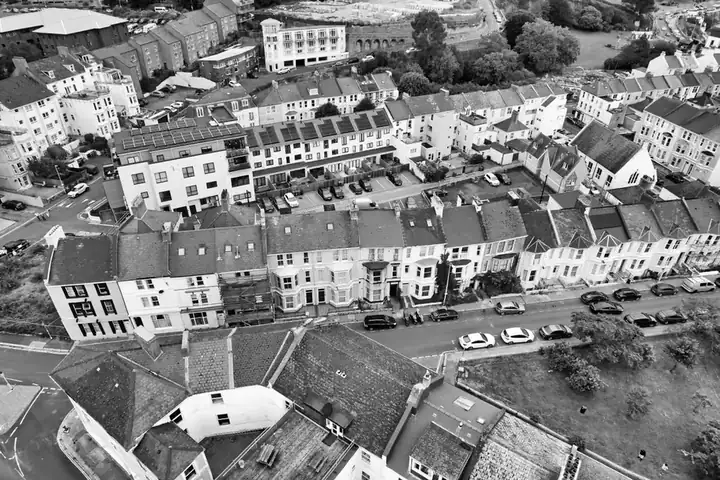
Everything that lands on both slopes funnels into it, along with moss, leaves and the odd tennis ball. On a terrace, one valley can take water off your roof and next door’s at the same time. The lead sits on boards laid between the rafters, with the tiles or slates cut and laid either side so a strip of open lead shows down the middle. When the boards go soft, or the lead was laid as one long piece, it splits along the bottom where water stands longest. A drip that only shows during heavy rain, in the room under the corner where two roofs meet, is classic valley behaviour.
Bay roofs are the other one people forget. Many Edwardian and 1930s bays in Dartford have a small lead-covered roof or a tiled hood with lead at the wall. Being low and easy to reach from a ladder makes them easy to repair. It also makes them the first thing to go if a thief turns up, which we come back to below.
Four ways lead flashing fails on a Dartford roof
Fitted properly, lead will see out most of the people living under it. When it doesn’t, we nearly always find one of these four things behind it.

Heat, and pieces that are too long
Lead grows and shrinks more than most building materials as it warms and cools, by roughly 0.03mm per metre for every degree. A dark roof facing south can swing by 50 or 60 degrees between a frosty night and a sunny afternoon. Over a 3-metre strip that’s about 5mm of movement, every day, for decades. If the piece is pinned at both ends it can’t slide, so it buckles and eventually cracks, usually close to a fixing. So a code 4 flashing is normally kept to about 1.5 metres a piece, joined by laps, and valley linings go down in short sections too. Long single lengths are the most common fault we find in valleys laid by a previous owner’s builder.
Pointing that lets go
The top edge of a flashing is folded into a brick joint, wedged and pointed. When that mortar cracks and drops out, the lead can lift in the wind and rain runs down the brickwork and straight behind it. Old soft lime pointing above a Victorian flashing goes this way slowly. Hard cement pointing goes faster, because it shrinks away from the lead.
Theft
Lead has scrap value, and low roofs are the easy target. The Scrap Metal Dealers Act 2013 ban on cash payments for scrap made stolen lead harder to sell, but bay tops, porch canopies and flat roofs on single-storey additions still get stripped now and then. You usually find out when the next downpour comes through the bay ceiling.
Wear and old patches
Valleys wear thin over decades where water and grit run down the middle, and old lead can pit and crack along folds. Then there’s the patching. Strips of self-adhesive flashing tape or a bead of sealant over a split look fine from the ground for a year or two, then peel, and water gets trapped behind them.
Flashing leak, condensation or a slipped tile? Reading the damp
Before paying for leadwork, make sure lead is the problem. We get called to plenty of “flashing leaks” that turn out to be something else.
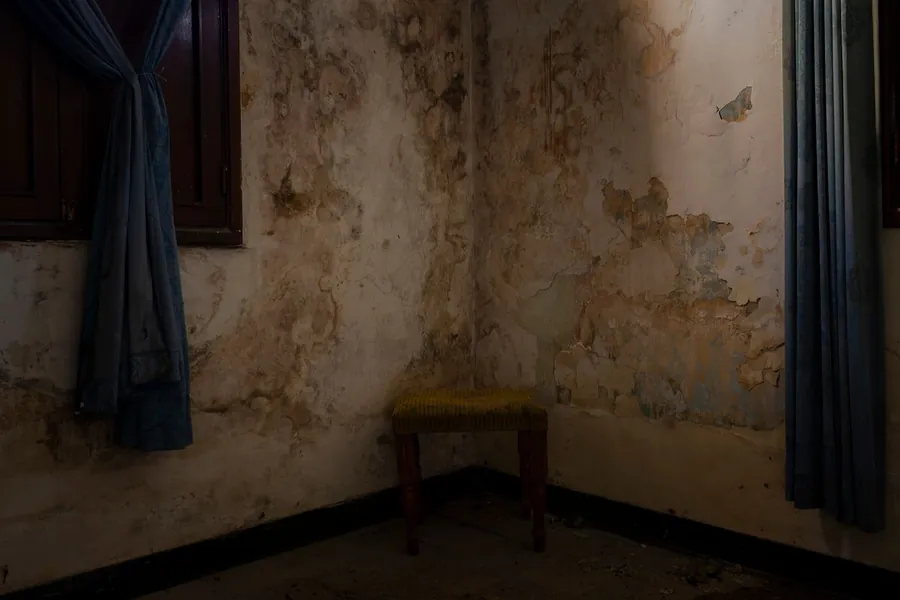
A flashing or valley leak follows the weather. The stain turns up next to a chimney breast, a dormer, or the wall where an extension joins, and it darkens after rain, sometimes only after rain from one direction. In Dartford that’s usually a south-westerly blowing in across the marshes. Between storms it dries back and leaves a brown tide mark that grows each time.
Condensation follows the temperature, not the rain. In the loft you’ll see droplets on the underside of the felt or the nail tips, damp spread across a whole slope rather than one corner, and black mould on rafters, often worst on the north side and on cold, still mornings. A house that has had new insulation or a new roof with non-breathable felt and no vents is a prime suspect. Approved Document C, the building regulations guidance on moisture, covers how roofs should be protected from condensation, and the fix is ventilation, not lead.
A slipped tile leaves its own pattern. The wet patch sits out in the middle of a slope, away from any wall, and on a dry day you can often see a chink of daylight from inside the loft. Our recent guide to slipped, cracked and missing roof tiles in Dartford goes through how to check for that from the ground.
Repair options: re-dress, new lead, substitutes or a GRP valley
Once you know the lead is to blame, you’ve got four realistic ways to fix it, and a decent quote will say which one it’s using and why. Be wary of a price that just says “renew leadwork” with no code, no length and no mention of how it’ll be fixed into the wall.
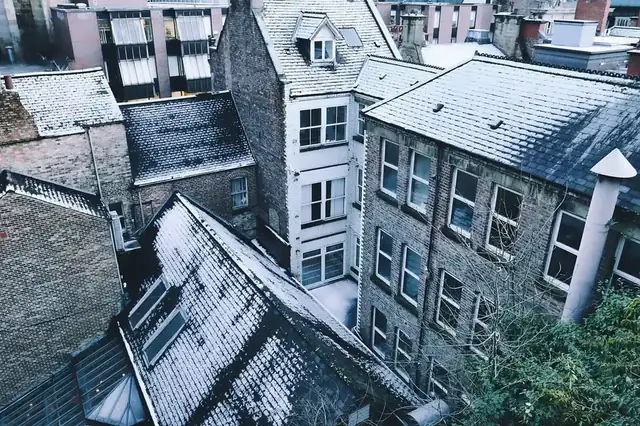
The cheapest is to re-dress and repoint. If the lead is sound and has only lifted or pulled out of its joint, it can be knocked back to shape, re-wedged into a freshly raked joint and pointed in. Done properly it’s a perfectly good repair, as long as the lead isn’t split.
Where the lead is cracked or worn, new sheet goes in, cut into short lengths with laps between them. The thickness matters. Code 3 is used for soakers, code 4 for step flashings, cover flashings and aprons, and code 5 for valleys and back gutters, where water runs constantly. The Lead Sheet Training Academy’s Rolled Lead Sheet manual, published by the training body based at East Peckham near Tonbridge, is the reference most roofers work to for sizes and details. A coat of patination oil afterwards stops white run-off staining the tiles below.
The third route is a lead substitute. Polymer and aluminium-backed flashing products are lighter, quicker to fit and worth nothing to a thief. They suit low bay roofs and single-storey additions that are easy to climb onto. They don’t suit listed homes, and in the town centre conservation area it’s worth checking with the council before anything changes on the front of the house.
For valleys there’s a fourth. A preformed glass-reinforced plastic liner can replace a worn lead valley, and on interlocking concrete tiles a dry valley system with a moulded trough and no mortar is common. Both are cheaper than code 5 lead and won’t be stolen. On a slate roof or a period house, lead usually looks right and lasts longer. The same choice between old mortar-bedded methods and dry-fix kits applies at the top of the roof too, which our post on ridge tile and dry verge repairs explains.
Lead flashing and valley repair costs in Dartford for 2026
These are guide prices from the leadwork we quote around Dartford, VAT included, for work reached from a ladder unless stated.

| Job | Typical 2026 price |
|---|---|
| Re-dress, re-wedge and repoint a loose flashing run | £150 - £350 |
| New code 4 step or cover flashing on a back addition or dormer cheek | £350 - £800 |
| New lead round a chimney (apron, sides and back gutter) | £450 - £1,300 |
| Re-lead a bay roof or porch canopy | £500 - £1,200 |
| Reline a valley in code 5 lead | £600 - £1,600 |
| Replace a worn valley with a GRP liner | £500 - £1,200 |
| Scaffold or tower where a ladder won’t do | add £500 - £1,200 |
Access moves these figures more than the lead does. A back-addition flashing on a two-storey terrace is often reachable from the garden, while a valley between two main slopes almost always needs scaffold. Valley jobs also tend to grow once the tiles come off, because boards that have been damp for years need replacing before new lead goes down. Ask for photos of what’s underneath before agreeing to any extra.
One pattern worth knowing about: on the houses we look at, a leak blamed on the lead quite often turns out to be the brick joints above it, which let rain into the wall and down behind a perfectly sound flashing. Repointing the courses above the lead can be the whole fix. Our roofing costs page has prices for the bigger jobs if the survey finds more than a join.
Frequently asked questions
How do I know if my lead flashing is leaking?
The giveaway is where the damp turns up and when. A flashing leak shows as a patch on the wall or ceiling right next to a chimney breast, a back addition or a dormer, and it gets worse after rain, especially rain driven in on a strong wind. From the garden, look for lead that has lifted away from the brick, joints above it with no mortar left, or a strip of sealant where the lead should be tucked into the wall.
Can lead flashing just be re-dressed instead of replaced?
Yes, if the lead itself is sound. Where a flashing has only lifted or come out of its mortar joint, a roofer can dress it back down, re-wedge it and repoint the joint for a fraction of the price of new lead. If it's split, worn thin, full of pinholes or made of pieces that are far too long, re-dressing only buys a season or two.
How much does it cost to reline a lead valley in Dartford?
Our guide price for relining a typical valley in code 5 lead is £600 to £1,600 including VAT, depending on its length, how many tiles have to come off either side and whether the boards underneath need replacing. A GRP valley liner usually comes in a little lower. Scaffold, where it's needed, adds roughly £500 to £1,200.
Is a lead substitute as good as real lead?
For flashings on an ordinary house it can be a sensible choice, particularly on low roofs where theft is a worry, because it has no scrap value. Check the manufacturer's stated lifespan, which is usually shorter than lead's. It isn't the right call for a listed building, and inside a conservation area it's worth asking Dartford Borough Council before you swap lead for something else on a visible elevation.
Want a Dartford roofer to look at yours?
A roofer will come out, check it from the loft and the outside, and give you a written price. Dartford, Crayford, Bexley, Swanley and nearby.