
16 November 2026
Why Is My Dartford Loft Dripping? Condensation, Roof Vents And 2026 Costs
Loft condensation in Dartford homes: why lofts drip in winter, felt vs breathable membrane, blocked eaves, tile and ridge vents, leak checks and 2026 prices.
It usually starts in the first proper cold snap of November. Somebody goes up for the Christmas decorations, puts a hand on the insulation and finds it damp, or hears a tap-tap of drips on the boards. Loft condensation in Dartford homes is one of the most common reasons we get called out in winter, and in most cases the roof isn’t leaking at all. Warm, wet air from the house is getting into a cold loft and has nowhere to go. A family of four can put something like 10 litres of water a day into the air just by cooking, showering, drying washing and breathing. In 2026 the fixes cost anything from about £60 for a sealed hatch to around £1,500 for a ventilated dry ridge, and most homes need only one or two of them. Below we look at why it happens, which Dartford houses are most prone to it, and how to tell it apart from a genuine leak.
Why Dartford lofts drip on cold winter mornings
The loft is the coldest room in the house, and on a clear, still night the roof gets colder still.
Tiles lose heat to an open sky, so by dawn the underside of the felt can sit a few degrees below the air temperature outside. Any warm, damp air that has drifted up from the house hits that surface, drops below its dew point and turns back into water. On a good roof, outside air moving through the loft carries most of that vapour away before it settles. On a poorly ventilated one it collects as beads on the felt, on nail points and on the underside of the tiles, then drips once the sun warms the roof up.
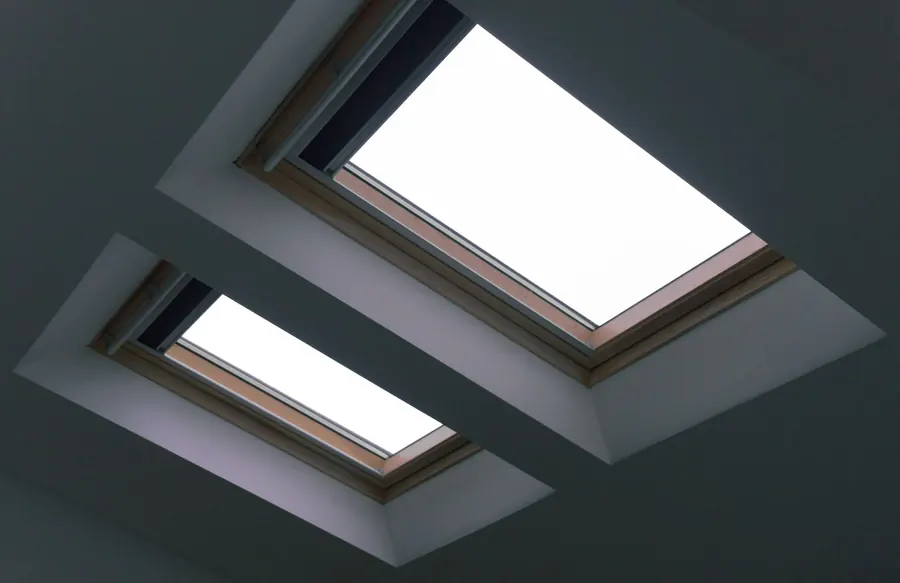
That’s why the symptoms come and go with the weather rather than the rain. A run of frosty, high-pressure days in January will do more damage than a wet week in October. A converted loft with roof windows has its own version of the same thing: warm air from the bedroom meets cold glass, and water runs down onto the frame. If you’re not sure which you’ve got, a roof inspection in Dartford looks at the loft from inside as well as the tiles from outside, which is the only way to be certain.
Black felt or breathable membrane: what’s over your rafters?
What’s stretched under your tiles decides how much ventilation the loft needs, and in Dartford it tracks fairly closely with when the house went up.

Most of the 1930s semis around Princes Road, Heathview Crescent and Joyden’s Wood were built with no underlay at all. Air moved freely through the gaps between the tiles, so those lofts rarely sweated. The trouble comes after a re-roof. Many were re-covered between the 1960s and the 1990s with black bitumen felt, which barely lets any moisture through. Put that over a house with modern heating, double glazing and a shower, and the loft has gone from draughty to sealed in one job.
The postwar council-built streets, such as Temple Hill and the later Fleetdown estate, mostly started life with bitumen felt under concrete tiles. Those roofs were designed to breathe through gaps at the eaves and, on some, vents near the ridge. Decades of new soffits, cavity-wall work and extra insulation have closed a lot of those gaps without anyone meaning to.
The newer homes at Castle Hill, Ebbsfleet Green and the other Ebbsfleet neighbourhoods have breathable membranes, the thin grey or white sheets with a maker’s name printed across them. These let vapour pass through far more readily than felt does. Some are sold as needing no extra ventilation, but that claim assumes the ceiling below is close to airtight. Once downlights, a loft hatch and a few pipe holes are in, it rarely is, and we still find wet membranes on houses barely ten years old. Our post on new-build roofs after the NHBC warranty ends covers the other things worth checking on those estates.
Insulation pushed into the eaves
The most common cause we find has nothing to do with the roof covering. It’s a well-meant insulation top-up.

Grant schemes and energy-saving drives over the past twenty years have put thick rolls of mineral wool into a huge number of Dartford lofts, and 270mm is now the depth usually recommended. That’s good for heating bills. The catch is that a roll laid right out to the edge of the loft fills the narrow gap where the rafters sit on the wall plate, and that gap is exactly where fresh air is supposed to come in. Block it along both sides and a felted loft has no way of drawing air through at all.
The fix is cheap and usually done from inside. The insulation is pulled back slightly at the eaves and a plastic or cardboard eaves tray, sometimes called a rafter ventilator, is fitted between each pair of rafters. It holds the insulation off the underside of the felt and keeps a channel open from the soffit into the loft. If your soffit boards are solid with no vents, a vented soffit or an over-fascia vent strip gives that channel something to draw from.
Tile vents, ridge vents and a dry ridge
Air coming in low down is half the job. It also needs a way out near the top, and on a felted roof that usually means adding vents.
The guidance roofers work to is BS 5250, the British Standard on managing moisture in buildings. For a cold loft under high-resistance felt, it broadly asks for a continuous opening of around 10mm along each eaves, with high-level ventilation added on steeper or larger roofs. In practice there are three ways to provide the top half.
Tile and slate vents
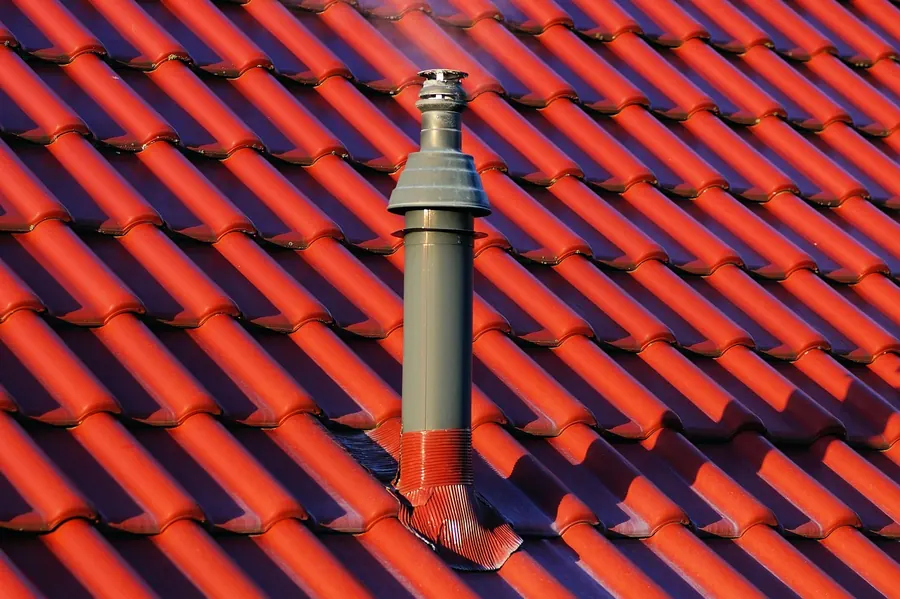
A tile vent is a moulded plastic tile, made to match the profile of your concrete or clay tiles, with a grille underneath and a collar that pushes through a cut in the felt. Slate vents do the same job on a slate roof. They go in a course or two below the ridge, spread across both slopes, and they’re quick to fit from a ladder or roof ladder on most two-storey Dartford houses. On the plain clay tiles of a 1930s hipped roof they’re more noticeable, so we tend to keep them to the rear slopes where we can.
Ventilated dry ridge
If the mortar on your ridge is already cracking, replacing it with a ventilated dry ridge sorts out both jobs at once. The ridge tiles are clipped and screwed down over a roll of breathable, ventilated material, and the felt is cut back either side of the ridge board so air can escape along the full length of the roof. From the street you can’t see it at all, which is why we like it on front slopes.
Ridge vent terminals
Where only part of the ridge needs to vent, or where a fan duct has to come out through the top of the roof, a single ventilated ridge terminal can be swapped in for one of the existing ridge tiles.
Bathroom and kitchen fans that vent into the loft
If one slope of a loft is far wetter than the rest, look for a flexible silver duct lying loose on the insulation. We find one in a surprising number of the lofts we go into.

A bathroom extractor that blows into the loft instead of outdoors is pumping hot shower air straight onto the coldest timber in the house. It happens in houses of every age, but mostly where a bathroom was refitted and the fan swapped without anyone going up the ladder to finish the duct. Approved Document F, the government’s ventilation guidance under the building regulations, expects bathroom and kitchen extract to go to the outside air, and a duct that ends in the loft doesn’t meet that.
The fix is simple enough. The duct is run to a tile vent with a pipe adaptor, a ridge terminal or a wall outlet in the gable or soffit. It should be insulated where it crosses the cold loft, kept as short and straight as possible, and laid so any water that forms inside it drains away from the fan rather than back into the ceiling. Tumble dryers vented through a window into a lean-to, or not vented at all, add to the load too.
Condensation or a roof leak? Five things to check
Before paying for vents, it’s worth being sure the water isn’t coming from outside. These checks sort most cases.

- Check the timing. Condensation shows up after cold, clear nights, often with no rain at all. A leak shows up during or just after rain, especially wind-driven rain from the south-west.
- Look at how far it spreads. Condensation tends to cover a whole slope, usually worst on the north-facing side. A leak makes one patch, often near a chimney, a valley or a join with an extension.
- Look for a pattern. Rows of drip marks on the insulation, lined up under the nail points or the tile battens, are classic condensation. A single stain that spreads outwards from one place is a leak.
- Check the timber. Black spotting spread along several rafters, or across old sarking boards, points to long-term damp air rather than rainwater.
- Look for daylight. On a sunny day, switch off the loft light. A chink of light through the felt usually means a slipped tile or a split, which our slipped and missing tiles guide covers.
If you still can’t tell, lay a sheet of newspaper under the wet area and check it after a cold, dry night and again after a wet one. Our guide to lead flashing and valley leaks goes through the damp patches that turn up where the roof meets a wall, which are the ones most often mistaken for condensation.
What fixing loft condensation costs in Dartford in 2026
These are our guide prices for ventilation work around Dartford, VAT included. Most homes need one or two items from this list, not all of it.

| Job | Typical 2026 price |
|---|---|
| Seal an existing loft hatch, or fit an insulated draught-sealed hatch | £60 - £250 |
| Pull back insulation and fit eaves ventilators from inside | £200 - £450 |
| Over-fascia vent strip or vented soffit, front and back | £250 - £600 |
| Tile or slate vent, fitted | £90 - £160 each |
| Re-route a bathroom fan to a tile vent or wall outlet | £180 - £450 |
| Ventilated dry ridge on a terrace or semi | £450 - £1,500 |
| Scaffold, where a ladder or inside access won’t do | add £500 - £1,200 |
Order matters. Stopping steam getting into the loft is the cheapest step and often makes the biggest difference, so the hatch and any loose fan duct come first. Air in at the eaves comes next. High-level vents or a dry ridge go in after that, and on many 1930s semis with a sound ridge they turn out not to be needed. If the felt itself is torn, brittle or sagging into the gutter, ventilation won’t cure it, and it may be time to look at our roofing costs page for a re-felt or re-roof instead. A wet loft that’s left for several winters ends up with rotten battens and rusted nails, so it’s worth sorting while the fix is still small.
Frequently asked questions
Is it normal to have some condensation in the loft in winter?
A light mist on the underside of the felt on the coldest mornings, gone by lunchtime, isn't worth losing sleep over. It becomes a problem when it drips onto the insulation, when the timbers stay damp for days or when black mould starts on the rafters. That means more moisture is getting into the loft than the ventilation can carry away.
Does a new breathable membrane mean my loft cannot sweat?
Not always. A breathable membrane lets vapour pass through it far more easily than old bitumen felt, but it still relies on the ceiling below being reasonably airtight and on the house not pumping steam into the loft. If a bathroom fan vents into the roof space or the loft hatch doesn't seal, a new membrane can still run wet.
How many tile vents does my roof need?
It depends on the size of the loft, the type of underlay and what's already open at the eaves. As a rough guide, a typical Dartford semi with bitumen felt and no eaves ventilation needs four to eight tile or slate vents spread across both slopes, plus air coming in low down. A roofer should check the manufacturer's stated vent area against the loft rather than guessing a number.
How much does it cost to fix loft condensation in Dartford?
Our 2026 guide prices, VAT included, run from about £60 to £250 to seal or replace a loft hatch, £200 to £450 to fit eaves ventilators from inside, £90 to £160 per tile vent and £450 to £1,500 for a ventilated dry ridge. Most homes need one or two of these rather than all of them, and scaffold adds £500 to £1,200 where the work can't be reached from a ladder or from inside.
Want a Dartford roofer to look at yours?
A roofer will come out, check it from the loft and the outside, and give you a written price. Dartford, Crayford, Bexley, Swanley and nearby.