
17 November 2026
Roofers In Wilmington, Sutton-at-Hone And Hawley: Darent Valley Roofs, Planning And 2026 Prices
Roofers in Wilmington, Sutton-at-Hone and Hawley: semis, bungalows, old peg-tiled houses, Church Hill rules, Darent flood risk, Green Belt and 2026 prices.
South of the A2, Dartford stops being a town and turns into a string of villages along the Darent. Wilmington comes first, with roughly 7,500 people in the parish. Then Hawley, up around Shirehall Road, and Sutton-at-Hone on the far side of the M25, where the parish shared with Hawley had 4,230 residents at the 2011 census. All three sit in the Borough of Dartford, so one council handles your planning questions. The roofs don’t share much else. Wilmington’s housing is mostly interwar and postwar semis and bungalows. Sutton-at-Hone has a church that burned in 1615 and a Knights Hospitaller chapel from the 1200s. Between them runs a river with its own Environment Agency flood warning area. This guide covers what roofers in Wilmington, Sutton-at-Hone and Hawley run into on each type of house, what the council and the Green Belt allow, and what the work costs in 2026. We’re based on the Dartford Heath side of town, a short drive north.
Roofers in Wilmington, Sutton-at-Hone and Hawley: one council, two parishes
People sometimes assume these villages answer to Sevenoaks, because Swanley does and the countryside looks much the same. They don’t. Wilmington is its own civil parish within the Borough of Dartford. Sutton-at-Hone and Hawley share a second parish, also in the borough, with the River Darent forming its eastern edge.
That shared parish used to be far larger. When it got a parish council in 1894 it took in Swanley Junction, Swanley Village, Hextable and Crockenhill too. The boundaries were redrawn in 1955 and those places went their own way, which is partly why Swanley now sits under a different council (we covered that in our post on roofers in Swanley, Hextable and Crockenhill). For roof work, the practical upshot is simple: planning and building control questions in all three villages go to Dartford Borough Council or a registered building control approver. The parish councils see applications and can comment, but they don’t decide them.
Most roof jobs never get that far. A slipped tile, a tired ridge or a split valley is maintenance. A full re-roof usually needs building control sign-off, which a roofer in a competent person scheme can certify for you. If you’re on the Wilmington side, our Wilmington roofing page has more about the village itself.
Wilmington’s semis and bungalows: concrete tiles and tired hips
Wilmington was orchard country for most of the 1800s. An 1839 estate map shows the village ringed by hop gardens, cherry gardens and plum orchards, and by 1900 the area was among the most important soft fruit centres in the country. Most of what stands on the old orchard land went up in the 20th century, between the wars and after 1945. One detail from the parish council’s heritage trail: some of the postwar council housing was built on the site of a former prisoner-of-war camp.
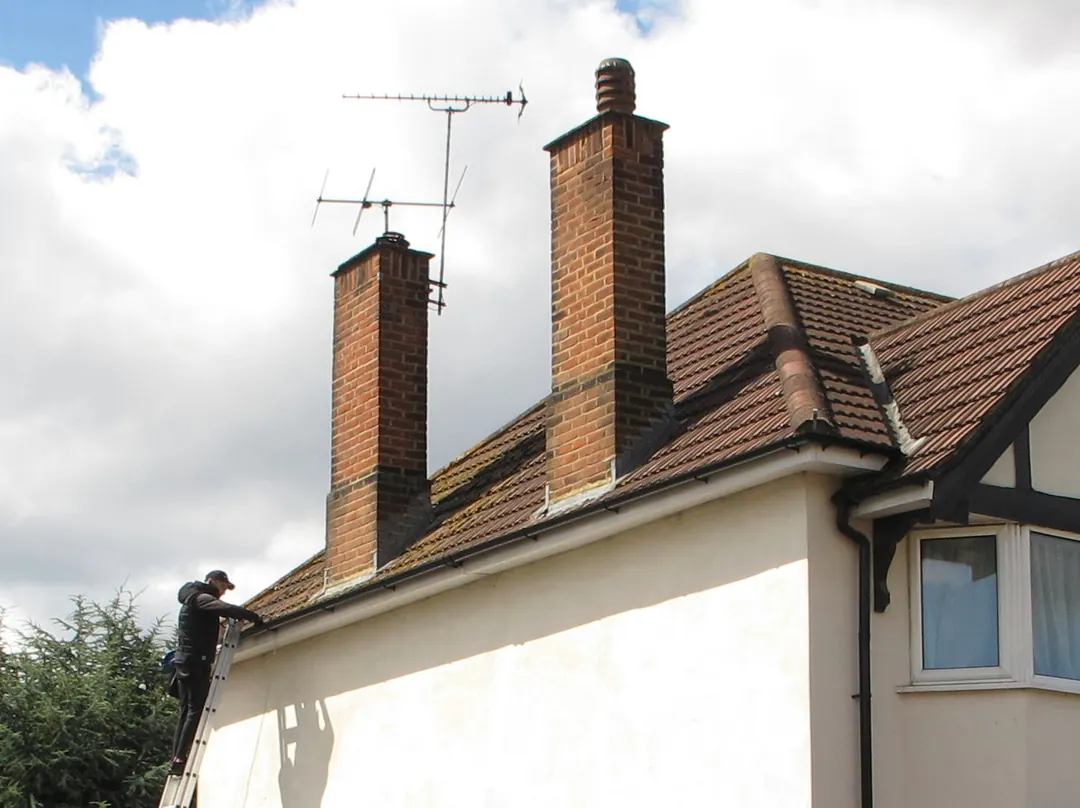
On the 1930s semis, the roof is often hipped, with a bay below and sometimes a small tiled canopy over the porch. Many were re-covered in concrete interlocking tiles decades ago. That swap usually added weight, and on some houses you can see a slight dip along the rafters where the old timbers have taken it. The hips are the usual weak point. Each hip is a line of tiles bedded on mortar, and once that mortar crumbles the tiles start to slide, beginning at the bottom where the hip iron holds them.
Bungalows are a different job. All the rooms sit under one roof, so there’s more tile per square metre of house than on a two-storey semi. On the plus side, nobody needs a two-storey scaffold, and plenty of repairs are done from a ladder or a small tower. The usual faults are at the verges and the valleys where a later extension joins on, and at a chimney that was left standing after the fireplace went.
Older cottages and farmhouses: Kent peg tiles and timber frames
Not everything in these villages is 20th century. Lower Barn End Farmhouse in Wilmington, now listed as Barn End House, is a timber-framed building dated to around 1470. Wilmington Hall went up in 1743. In Sutton-at-Hone, the parish church of St John the Baptist was standing by 1077 and was largely rebuilt after a fire in 1615, reputedly started by someone firing a gun at a bird.

Older Kent houses like these were traditionally roofed in clay plain tiles, the small, slightly curved tiles locals call peg tiles because they were once hung on the battens with oak pegs. A peg tile roof moves and breathes in a way a modern roof doesn’t. It has no felt, or felt added much later, and the tiles rely on their overlap and the steep pitch to shed water. When a peg rots or a nail rusts, the tile slips. When a whole slope is going, it’s usually the battens and fixings that have failed, not the tiles themselves.
That matters for the price and for what a good roofer suggests. Sound old clay tiles are worth taking off carefully, sorting and re-using, topped up with reclaimed tiles of the same size and colour. Swapping them for concrete is cheaper but heavier, it changes the look completely, and on a listed building it needs consent. Check the listing before anyone strips anything.
Church Hill conservation area and the listed buildings
Dartford Borough Council has six conservation areas: Dartford Town Centre, Greenhithe, Southfleet, Hook Green, Red Street and Church Hill in Wilmington. You can see them on the council’s conservation areas page. Church Hill is the only one in these three villages. Neither Sutton-at-Hone nor Hawley has one.
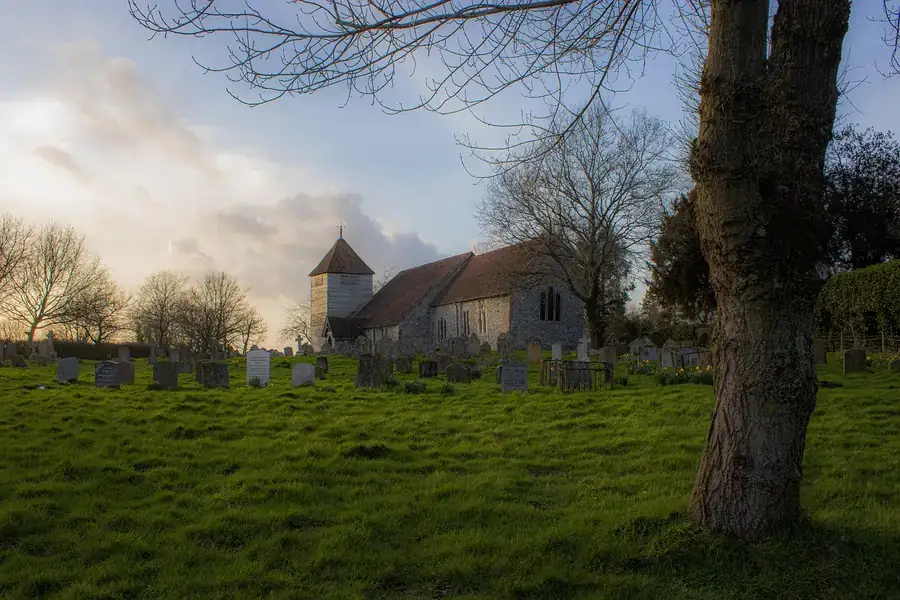
Church Hill was designated in September 1998 and is small, about six hectares. It’s centred on St Michael and All Angels, which is Grade I listed, and it covers the properties fronting Church Hill and High Road. Wilmington House inside it is Grade II, as are several of the churchyard tombs. The council wrote an appraisal of the area in March 1999.
A conservation area doesn’t stop you repairing or re-covering your roof in matching materials. What it does is trim your permitted development rights. Dormers and other roof extensions aren’t permitted development there, so they go through a planning application. A rooflight that sits nearly flush is normally fine. Swapping clay tiles for concrete, or slate for tile, is the kind of change worth asking the council about first, because it alters how the street looks. If your house is listed, in Wilmington or in Sutton-at-Hone, listed building consent applies to work that affects its character, inside or out.
Sutton-at-Hone, Hawley and the River Darent
Sutton-at-Hone and Hawley both sit on the west bank of the Darent, with the M25 running between them. The river shapes the place. At St John’s Jerusalem, the National Trust property founded as a Knights Hospitaller commandery in 1199, the Darent loops round the garden as a moat.

It also floods now and then. The Environment Agency runs a flood warning area for the Darent from Otford down through Farningham, Horton Kirby, South Darenth and Sutton-at-Hone to Hawley, and a Kent County Council surface water study recorded localised ponding in the low-lying parts of Sutton-at-Hone. Not every house near the river is at risk, and most of the higher ground isn’t. Put your postcode into the Environment Agency’s long-term flood risk service and it will tell you where your house stands.
How does that touch your roof? Mostly through damp. Houses on low, wet ground near a river sit in damper air for longer, and moss and lichen do well on north-facing slopes. Gutters that overflow onto walls make it worse. Outbuildings and garages near the water often have the oldest roofs on the property, sometimes still in corrugated cement sheet, which can contain asbestos and should be tested before anyone cuts or lifts it. And if a ceiling stain shows up after a wet week, don’t assume it’s the river air. Get the loft checked. More often than not there is a slipped tile or a split flashing above it.
Green Belt rules for dormers, loft conversions and raised roofs
Most of the open land around these villages is Metropolitan Green Belt. Dartford’s Local Plan, adopted in April 2024, says the openness of the Green Belt in the south of the borough will be kept, and any village development should be modest in scale. The policies map shows whether your house sits inside a village boundary or out in the Green Belt itself, and it’s worth checking before you draw anything up.

Re-roofing isn’t touched by any of this. A new covering adds no floor space, so Green Belt policy has nothing to say about it. It starts to matter when the roof gets bigger. A raised ridge, a large dormer or a loft conversion that goes beyond permitted development needs full planning permission, and the council will judge whether the extra bulk harms the openness around it.
Here’s the bit people often get wrong. Being in the Green Belt doesn’t, on its own, take away your permitted development rights. Outside a conservation area, a rear dormer can still go ahead without an application if it stays inside the national limits. Those are 40 cubic metres of extra roof space on a terraced house and 50 on a semi or detached one, with no dormer facing the road and materials that match. The Planning Portal’s loft conversion guidance sets out the full conditions. A bungalow that has already been extended may have used up some of that allowance, so check what’s been done before.
What roof work costs in Wilmington, Sutton-at-Hone and Hawley in 2026
These are our own guide prices for 2026, including VAT. A survey and a written, itemised quote come first, and they’re free.

- Refixing or replacing a handful of slipped tiles: £180 to £450
- Re-bedding a hip or ridge in mortar, or converting it to dry fix: £450 to £1,200
- Re-lining a valley where an extension meets the main roof: £600 to £1,600
- Taking down a redundant chimney stack on a bungalow and tiling over: from about £1,200
- Full re-roof, postwar semi with a plain gable in concrete tiles: £8,500 to £12,500
- Full re-roof, 1930s hipped semi: £10,500 to £16,000
- Full re-roof, bungalow without dormers: £10,000 to £15,500
- Detached houses and chalet bungalows with dormers: from about £14,000
Clay plain tiles, new or reclaimed, cost noticeably more than concrete, and laying them takes longer because each tile is small. Older houses add time for sorting and re-using the sound tiles, and a listed building may need consent first. Asbestos sheet on a garage or outbuilding has to come off under the right controls, which adds to the bill. Whoever you ask to quote, make sure scaffold, tiles, ridge, flashings and waste are each priced on their own line. That way two quotes can be compared fairly.
Book a free roof survey in Wilmington, Sutton-at-Hone or Hawley
Frequently asked questions
Is Wilmington run by Dartford or Sevenoaks council?
Dartford. Wilmington is a civil parish inside the Borough of Dartford, and so is Sutton-at-Hone and Hawley. Both parish councils comment on planning applications, but Dartford Borough Council decides them. Swanley, a few miles further south, is the point where Sevenoaks District Council takes over.
Do I need permission to re-roof a house on Church Hill in Wilmington?
Usually not for a like-for-like re-covering, even inside the Church Hill conservation area. It changes if the house is listed, if you want a different roof material that alters how the house looks, or if you plan rooflights or a dormer facing the road. Speak to Dartford Borough Council's planning team before ordering materials if any of those apply.
Can I build a dormer on a house in the Green Belt near Sutton-at-Hone?
Often, yes. Green Belt land is not one of the designations that removes permitted development rights, so a rear dormer within the national volume limits (40 cubic metres on a terraced house, 50 on a semi or detached) can still go ahead without an application. Anything bigger needs full planning permission, and Dartford's Local Plan treats extra bulk in the Green Belt strictly.
What does a new roof cost on a Wilmington semi in 2026?
As a guide, re-covering a postwar semi with a plain gable in concrete tiles comes to about £8,500 to £12,500 including VAT, and a hipped 1930s semi £10,500 to £16,000. A bungalow with no dormers is about £10,000 to £15,500. Clay plain tiles cost noticeably more than concrete. Your fixed figure comes after a free survey.
Want a Dartford roofer to look at yours?
A roofer will come out, check it from the loft and the outside, and give you a written price. Dartford, Crayford, Bexley, Swanley and nearby.