
5 November 2026
Roofers In Swanley, Hextable And Crockenhill: House Types, Council Rules And 2026 Prices
Roofers in Swanley, Hextable and Crockenhill: the faults each era of house throws up, why Sevenoaks DC handles planning, Green Belt limits and 2026 prices.
Letters to Swanley carry a BR8 postcode, which is Bromley’s. The phone numbers start 01322, which is Dartford’s. The council that decides about your roof, though, is neither of them. It’s Sevenoaks District Council, whose offices are in Argyle Road in Sevenoaks. Hextable and Crockenhill are the same, and the mix-up catches people out when they need planning advice or building control sign-off. So this guide to roofers in Swanley, Hextable and Crockenhill starts there, and then goes house type by house type. These three places were built in very different bursts, from Victorian villas to estates of the 1960s to 2000s cul-de-sacs, and each burst wears out in its own way. We cover all three from our base in west Dartford, around five miles away. Rough 2026 prices are near the end.
Roofers in Swanley, Hextable and Crockenhill: start with the council, not the tiles
Most roof jobs never need the council. Replacing tiles, re-bedding a ridge or renewing a valley is maintenance, and nobody has to apply for it. The council matters when the job gets bigger or the house is unusual, so it helps to know which one you’re dealing with before anyone starts quoting.
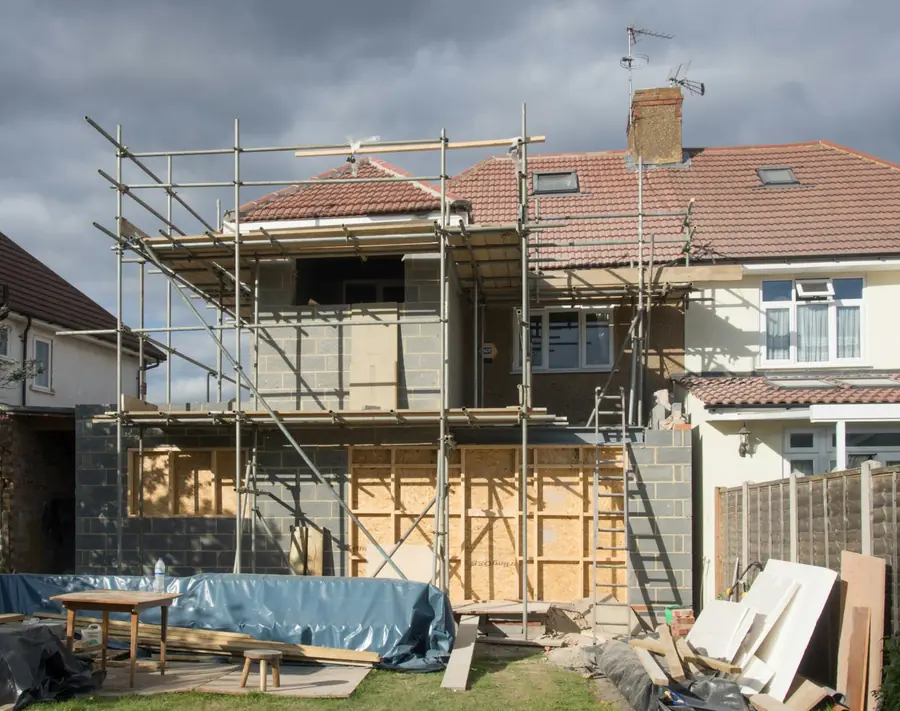
All three places sit in Sevenoaks District. Swanley has had a town council since 1974. Hextable broke away from it and got its own parish council in April 2008, after a three-year campaign. Crockenhill has a parish council of its own as well. Parish and town councils get to comment on planning applications, but they don’t decide them. Sevenoaks District Council does, and it runs building control too.
Why bother knowing? A roofer used to working in Dartford Borough can send you to the wrong office, or quote you rules from the wrong conservation area list. If you’re on the Swanley side, our Swanley roofing page covers the estates we get asked about most and how we price there. The rest of this guide takes each kind of house in turn.
Swanley’s estates: forty years of building, one set of faults
Swanley barely existed before the railway arrived in the 1860s. Most of the town you see now went up between the end of the war and the late 1980s, nearly all of it low-rise. The main private estates are Newlands to the north, St Georges to the east and High Firs to the south. St Mary’s and White Oak are the main social housing estates, and most of those homes belong to West Kent Housing Association.
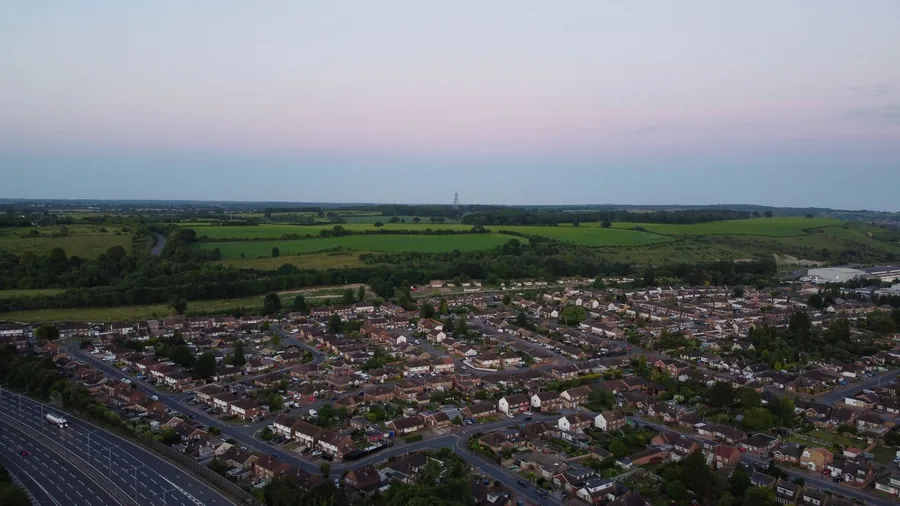
Roofs from those decades were mostly built the same way: concrete interlocking tiles, mortar holding the ridge and the verges, and bitumen felt under the battens. The tiles themselves often outlast everything around them. What goes first is the mortar. It cracks, the ridge tiles rock in a gale and water runs in along the verge. In the jobs we handle on houses like these, the call is more often about a ridge, a verge or a gutter than about the tiles on the slope.
The felt goes next. Early bitumen felt turns brittle and splits where it crosses the eaves, so rain blown under the bottom course ends up soaking the fascia rather than running into the gutter. Lofts on these houses were also built with no ventilation, and once thick insulation went in, many started to sweat in winter. If you find black mould on the underside of the felt, or damp patches on the timbers, it’s usually condensation rather than a leak.
Two other things come up a lot here. Flat-roofed garages, porches and dormers from the 1960s and 70s may have felt that’s well past its life, and some garages have asbestos cement sheets that need a licensed approach before anyone cuts them. Then there’s the 1970s town centre, where flats sit above the shops. If you own one on a lease, the roof almost always belongs to the freeholder, so read the lease before you pay anyone. Housing association tenants should report roof faults to their landlord first.
The older Swanley that survived: villas, slate and Swanley Village
Swanley’s first planners pictured a smart Victorian suburb, with villas along London Road and Birchwood Park Avenue. Nurseries and industry got there first, and plenty of Victorian houses were knocked down for the new town centre in the 1970s. Some survived, though. There are late Victorian and Edwardian houses on Swanley Lane and Birchwood Park Avenue, and a row of Georgian semis on Goldsel Road.
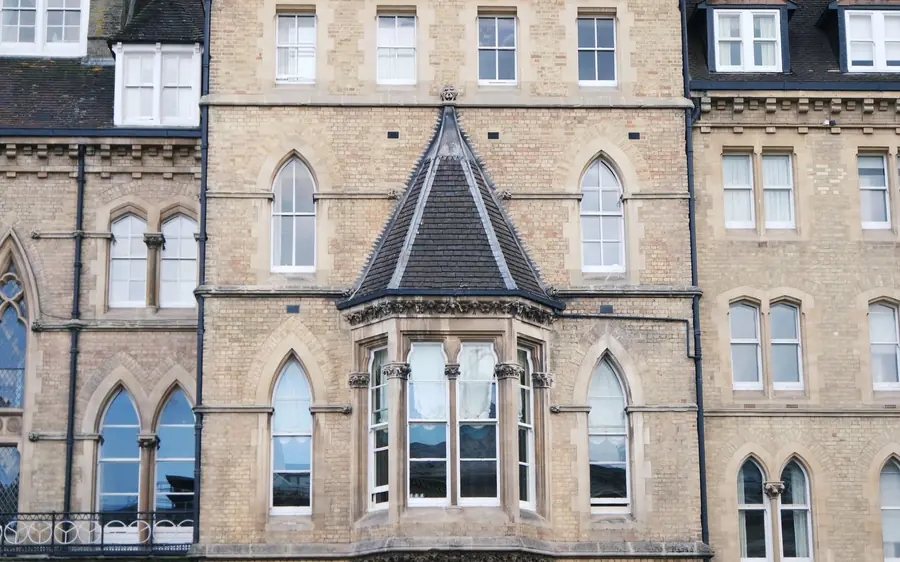
They fail in a different way from the estates. Most are natural slate, nailed with iron nails that rust through after a century or so. When that happens slates slide out one by one, often after frost, and a new one turns up in the gutter every few weeks. Many of these houses never had felt under the slates at all, so a slipped slate means water lands straight on the ceiling below. Chimneys are the other big job: tall stacks, crumbling lime mortar and lead flashings that have lifted. Fixing slates one by one with copper tingles works for a while. Once the nails have gone across a whole slope, stripping and re-laying it costs less in the long run.
Swanley Village, a mile and a half north-east of the town, is different again. It’s a conservation area, and the whole of it sits inside the Metropolitan Green Belt. Sevenoaks District Council’s Swanley Village conservation area record links to the 2019 appraisal, which describes a Kentish hamlet with buildings from the late medieval period to the early 1900s. Several of its listed houses, such as Alice Dene on Beechenlea Lane, are yellow or buff brick under slate. On houses like that, matching the slate and keeping the original details matters as much as keeping the rain out.
Hextable: a village built in instalments
Hextable grew in stages. Hextable Farm was sold off in 1870, and the plan was villas for well-off families. Then the nurseries arrived, drawn by the rich soil and the railway at Swanley Junction, and a horticultural college opened in the late 1880s. Its old gardens are still looked after at the Hextable Heritage Centre. Building through the twentieth century happened in fits, a few at a time, which is why the village looks so mixed. Some of the old nurseries still give their names to streets, and two estates of four and five-bedroom detached houses went up in the 1990s and 2000s. Around 4,700 people now live in about 1,800 homes.
All that piecemeal building leaves roofers one big headache: matching. Next-door houses can be decades apart. One road might hold a clay-tiled house from the early 1900s, a concrete-tiled semi from the 1950s and a 2000s detached house with dry-fix ridges. Repairing one usually means hunting down tiles that match its own era, not its neighbour’s. Reclaimed clay tiles can be found for the older houses. For some discontinued concrete profiles, the only honest answer is to take good tiles from a hidden slope and put new ones there.
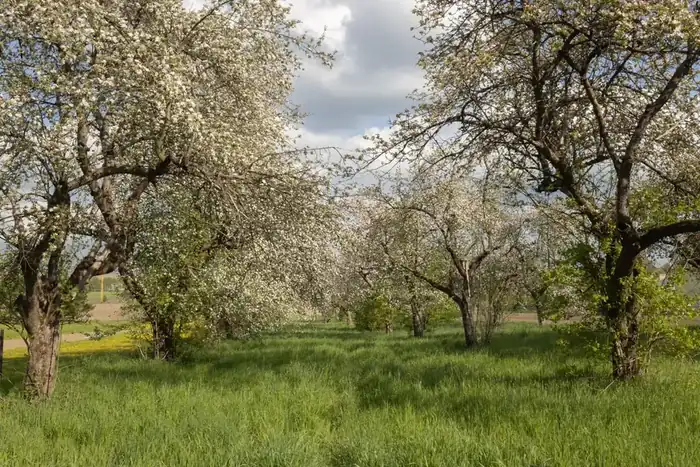
Trees are the other thing. Hextable and the edges of Swanley still have garden fruit trees left from the old orchards, and the Avenue of Limes between New Barn Road and College Road drops a lot of leaves each autumn. Leaves block gutters and valleys, and roof slopes under branches stay damp and grow moss. Clearing the gutters once a year is a cheap job. If they overflow for years, the fascia boards rot behind them, and that’s a much bigger bill.
The 1990s and 2000s houses are reaching the age where their first faults appear. Dry-fix ridge and verge systems don’t need mortar, but their plastic clips and caps get brittle in the sun, and a few on every road have started to work loose. It’s a small repair if you catch it early.
Crockenhill: small, open and exposed at the edges
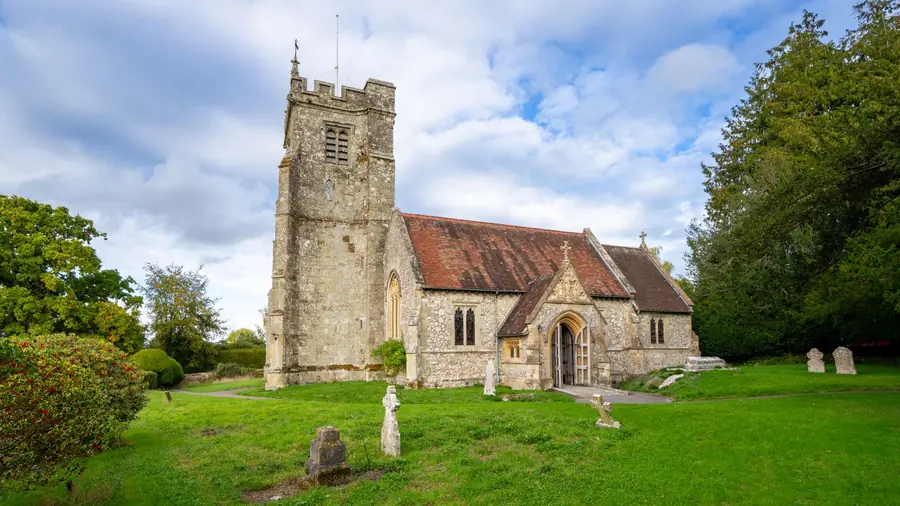
Crockenhill is the smallest of the three, with about 1,650 people at the 2011 census. It sits a mile south of Swanley, between the town, Eynsford and Orpington. The name is Old English and is usually read as “quarry on the hill”, from a word meaning a chalk pit. Its oldest buildings include All Souls Church, built in 1851 and now Grade II listed, and Skeet Hill House, which is thought to be about 400 years old.
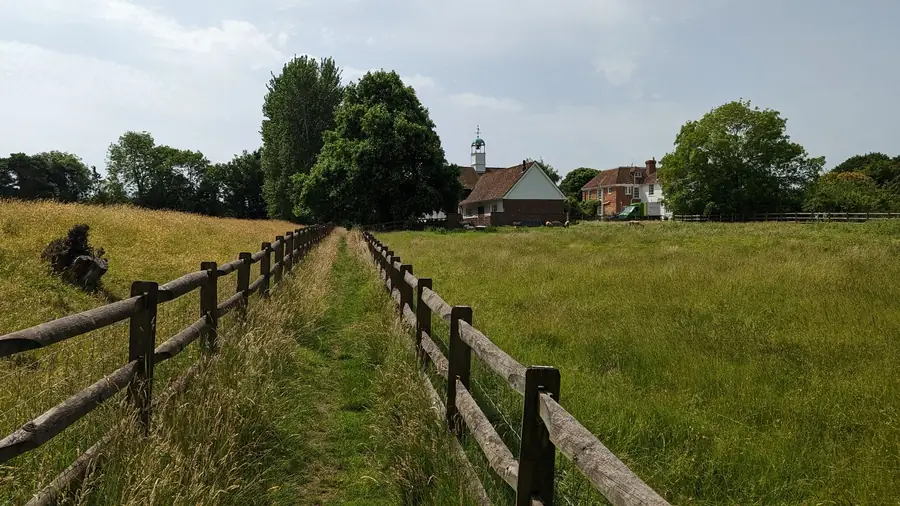
The roof issue that marks Crockenhill out is exposure. Inside Swanley, rows of houses shelter each other. Houses on the edges of Crockenhill back onto open Green Belt farmland, with nothing between them and the wind. Ridges, verges and the last courses of tiles on the exposed gable take the strain. A storm that lifts nothing in the middle of Swanley can strip a ridge off a gable end on the edge of the village.
On those houses, a mortar ridge that’s merely tired is worth upgrading to a mechanically fixed ridge, and loose verge tiles are worth clipping. Modern tile fixing rules ask for more nails and clips on exposed sites than older roofs ever had. If your roof was laid before those rules, the edges are where it shows.
Planning, Green Belt and building control for roofers in Swanley and the villages
Planning first. Re-covering a house in similar materials doesn’t need planning permission in Swanley, Hextable or Crockenhill, unless the building is listed. The district has 41 conservation areas on Sevenoaks District Council’s conservation area list, and only Swanley Village is in our three places. Hextable and Crockenhill aren’t on it, whatever a neighbour says.
The Green Belt is a separate question, and about 93% of Sevenoaks District is covered by it. It doesn’t affect like-for-like roofing at all. It starts to matter when a roof job makes the house bigger: a large dormer, a raised ridge, a loft conversion that needs full planning permission. Green Belt policy is strict about extra bulk, so it’s worth asking the council’s view before you pay for drawings.
Building Regulations are a different system again. They apply even when planning doesn’t. A full re-roof normally needs building control sign-off, and so does swapping slate for heavier concrete tiles, because the timbers may need checking. Our guide to planning permission and Building Regulations for re-roofing walks through the 25% and 50% rules and the 15% weight rule. Those rules are national, but the paperwork here goes to Sevenoaks District Council’s building control team, not Dartford’s. A roofer registered with a competent person scheme can self-certify instead.
What roof work costs in Swanley, Hextable and Crockenhill in 2026
These are our own guide prices for 2026, including VAT. One thing helps around here: Swanley is low-rise, and a lot of repairs can be done from a ladder or a tower without full scaffold.

- Refixing or replacing a few slipped tiles: £180 to £450
- Re-bedding or dry-fixing a ridge: £450 to £1,200
- Dry verge kit on one gable, typical on the exposed edges of Crockenhill: £350 to £900
- Renewing a valley: £600 to £1,600
- Re-covering a single garage in EPDM: £1,300 to £2,400, or £1,800 to £3,500 if asbestos sheets come off first
- Full re-roof, postwar semi with a plain gable and concrete tiles: £8,500 to £12,500
- Full re-roof, hipped semi: £10,500 to £16,000
- Full re-roof, bungalow without dormers: £10,000 to £15,500
- Detached houses, including Hextable’s newer four and five-bedroom homes: from about £14,000
Where a house sits on the list depends on access, the tile you choose and what turns up once the old covering is off. On the older houses, keeping the slate or matching clay tiles adds to the bill. Ask any roofer, us included, for an itemised quote with the tiles, the ridge, the flashings, the scaffold and waste each on their own line. Then you can compare like with like.
Frequently asked questions
Which council deals with roof planning in Swanley, Hextable and Crockenhill?
Sevenoaks District Council, for all three. Swanley has a BR8 postcode and an 01322 phone code, which makes people assume Bromley or Dartford, but neither of those councils has any say here. Hextable and Crockenhill have their own parish councils, and the parish can comment on an application, but Sevenoaks District Council makes the decision and runs building control.
Are Hextable or Crockenhill in a conservation area?
No. Sevenoaks District Council lists 41 conservation areas, and neither Hextable nor Crockenhill is one of them. Swanley Village is the only conservation area across the three places. A listed building anywhere still needs listed building consent for work that changes its character, so check the listing if your house is an old one.
Does the Green Belt stop me re-roofing my house?
No. Re-covering a roof in similar materials doesn't add floor space, so Green Belt policy has nothing to say about it. It starts to matter when the work makes the house bigger, such as a dormer, a raised ridge or a loft conversion that goes beyond permitted development. Those can be harder to get approved here than in a town without Green Belt.
How much does a new roof cost on a Swanley estate house in 2026?
As a rough guide, a postwar semi with a plain gable and concrete tiles comes to about £8,500 to £12,500 including VAT, and a hipped semi £10,500 to £16,000. A bungalow often costs more than people expect, at around £10,000 to £15,500, because the whole house sits under one roof. Smaller jobs like a tile refix start at about £180.
Want a Dartford roofer to look at yours?
A roofer will come out, check it from the loft and the outside, and give you a written price. Dartford, Crayford, Bexley, Swanley and nearby.