
13 November 2026
Roofers In Greenhithe, Swanscombe And Ebbsfleet: Riverside Roofs, Planning And 2026 Prices
Roofers in Greenhithe, Swanscombe and Ebbsfleet: cement-era terraces, Ingress Park, garden city new builds, river wind, who handles planning and 2026 prices.
Stand on the river wall at Greenhithe and you can see most of what a roofer in this corner of Kent has to deal with. Behind you are the old village terraces and the Ingress Park houses. Further back, out of sight, are the chalk quarries the area was built on, now filled with shops and homes. In front is a wide, open stretch of the Thames with Essex on the far bank. Swanscombe has around 6,300 people, Greenhithe about 6,500, and Ebbsfleet Garden City passed its 5,000th new home in December 2025, with up to 15,000 planned. That’s three very different generations of roof inside a couple of miles. This guide goes through each one, what tends to fail on it, who you ask about planning (it isn’t always Dartford Borough Council) and what work costs in 2026. We’re based on Chastilian Road in west Dartford, about six miles from Greenhithe and seven from Swanscombe.
Roofers in Greenhithe, Swanscombe and Ebbsfleet: three ages of house, one stretch of river
The first question we ask anyone calling from DA9 or DA10 is when their house was built. The answer tells us more about the likely fault than the postcode does.
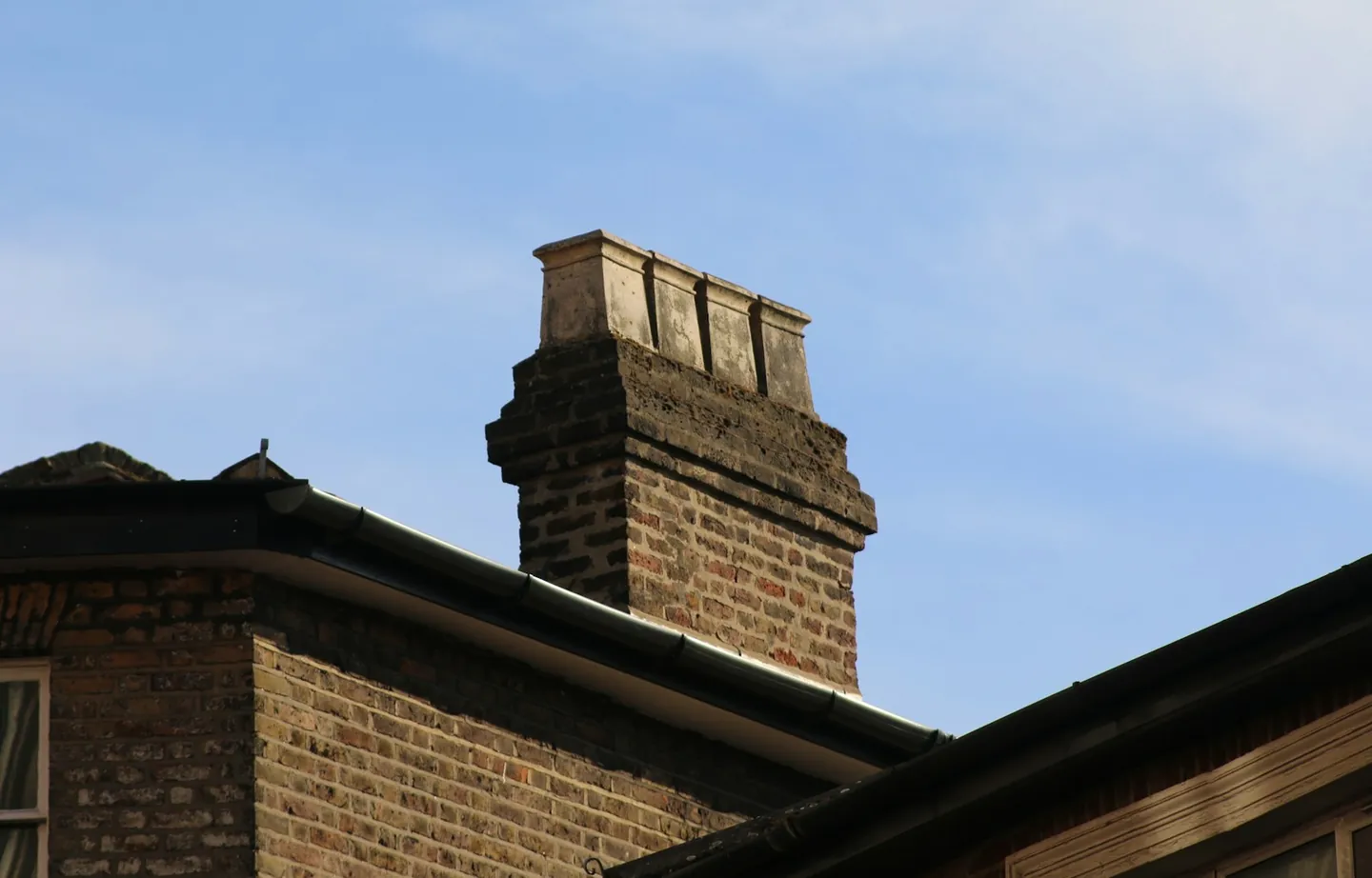
Roughly speaking, the houses here fall into three groups. The oldest are the Victorian and Edwardian terraces built for the cement works and the riverside trades, in Swanscombe and around Greenhithe High Street. Then come the estates of the late 1990s and 2000s, built as the Thames Gateway got going and Bluewater opened in 1999. Ingress Park and Waterstone Park are the big ones. The newest are the garden city neighbourhoods at Castle Hill, Ebbsfleet Green and Whitecliffe, most of them built in the last ten years.
Each group fails in its own way, and a roofer who treats them all the same will either miss something or quote for work you don’t need. Our Greenhithe roofing page sets out how we handle the old village and Ingress Park, and the Swanscombe page covers the terraces and Castle Hill. Here we go a bit deeper.
Cement-town terraces: Swanscombe and old Greenhithe
Swanscombe was a works town. James Frost started making cement here in 1825, and for close to a century it was the biggest plant in Britain. Greenhithe had wharves for chalk and lime, then a paper mill that ran from 1908 until 1992. The terraces that housed those workers make up much of the older housing in both places, and they were built in rows as one long structure. That still matters when something goes wrong on the roof.

Most of these roofs started out as Welsh slate on timber battens with no felt underneath. Plenty have since been re-covered in concrete tiles, sometimes well and sometimes not. Concrete tiles are a lot heavier than slate, and on some terraces re-covered that way you can see the result from the street: a slope that sags between the party walls because rafters sized for slate are now carrying far more weight. If you’re thinking of re-roofing a house like that, the timbers need checking before anyone prices new tiles.
The other thing to know is that a terrace roof is a shared roof. The slope runs from one house into the next, chimney stacks often serve two homes, and the valley or gutter at the back may drain both. Leaks in these streets very often start at a party-wall stack or a shared valley, so the cause can sit on your neighbour’s side of the line. Expect a good roofer to look at both sides and talk to next door before starting. If the job affects the party wall itself, the Party Wall Act may apply.
Ingress Park and Waterstone Park: Bluewater-era estates at 20 years old
Crest Nicholson started building Ingress Park around 2000, on brownfield land around Ingress Abbey, and roughly 1,450 to 1,500 homes followed. Waterstone Park went up nearby in the same period. These houses are now somewhere between 15 and 25 years old.
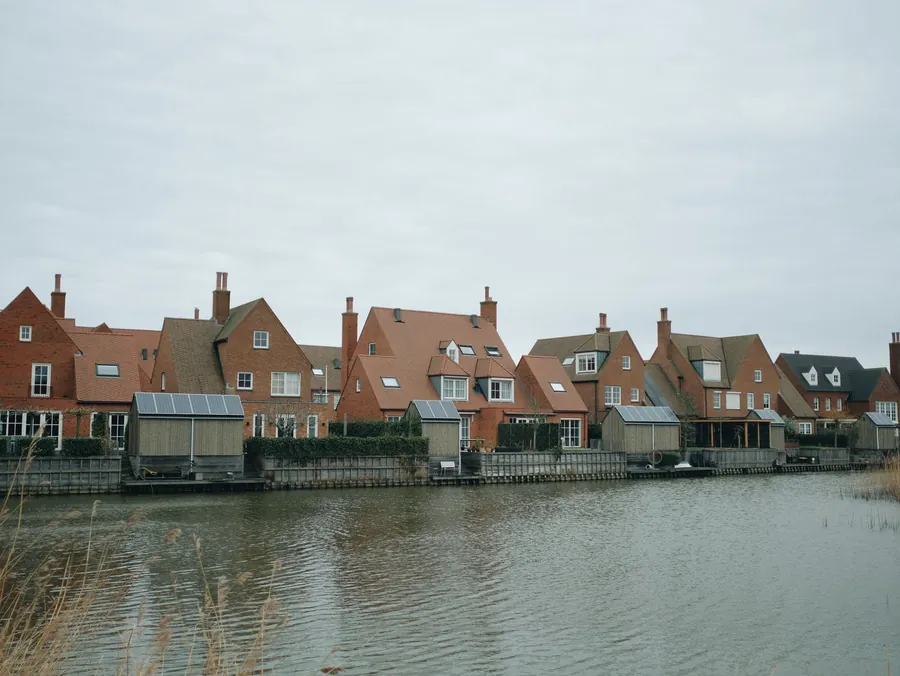
That’s an age when small parts start to wear rather than whole roofs. The tiles are usually fine. What we’d look at first is the dry-fix ridge and verge system, the plastic caps and clips that replaced mortar on most houses of this era. In strong sun they go brittle, and on an exposed gable one cap working loose can let the wind get at the next. Lead or GRP valleys, the seals around soil pipes and vent tiles, and gutter outlets choked with leaves from the landscaping are the other usual suspects.
Some Ingress Park homes are flats, and some houses there come under a management company. If yours does, check your lease before booking any roof work, because the roof may belong to the freeholder and the bill may sit in the service charge. Owners of freehold houses here are on their own now: any NHBC cover ran out years ago.
Castle Hill, Ebbsfleet Green and Whitecliffe: newer garden city roofs
Ebbsfleet is a different story. Castle Hill was the first neighbourhood built in Eastern Quarry, and its first phase of about 850 homes was finished by 2019. Redrow began handing over homes at Ebbsfleet Green in December 2016 and completed all 900 in 2025. Whitecliffe, the new name for the rest of Eastern Quarry, including Alkerden, is still being built.
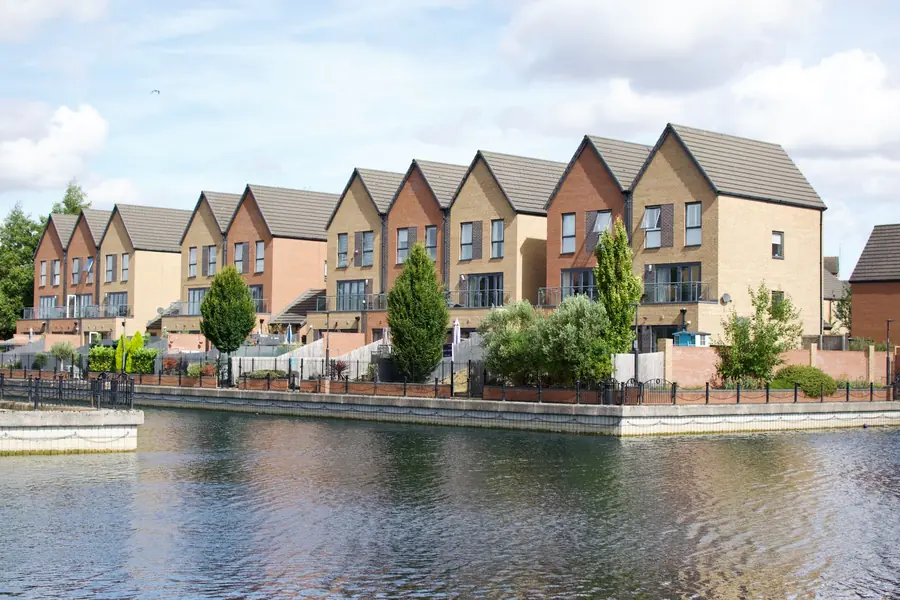
On a house this young, the first question isn’t what’s wrong but who pays. NHBC Buildmark runs for ten years from legal completion. In the first two years the builder has to put most defects right. From year three to year ten, NHBC’s insurance covers damage caused by defects in the parts of the home your policy lists. NHBC sets out exactly what Buildmark covers at each stage. Since Ebbsfleet Green’s first homes date from December 2016, the earliest of them reach ten years next month. If you’ve noticed a loose ridge, a missing verge cap or damp in the loft, report it before your cover ends, not after.
What tends to come up on these newer roofs is mostly snagging that never got done: verge caps clipped on without the clips engaging, ridge screws that missed the timber, lap vents left unfitted, loft insulation pushed into the eaves so the roof can’t breathe. We’ve written a longer guide on what to check on a new-build roof once the NHBC years are over, which applies to Castle Hill as much as anywhere. Three-storey townhouses are common in Ebbsfleet, which matters later when we get to prices, because they need taller scaffold.
Wind off the water: why riverside roofs lose their edges
Greenhithe and Swanscombe face north across the river to Essex. Wind from the north and east has nothing to slow it down on the way in, just open water and the marshes on either bank. The Swanscombe Peninsula sticks out into the Thames and was made a Site of Special Scientific Interest in 2021, so it’s going to stay open ground.
On a roof, exposure shows at the edges. A gust gets under a verge tile or the end of a ridge, lifts it, and the next gust pulls the rest along. The middle of the slope, held down by the tiles above it, usually survives. So after a stormy night here the calls are mostly about ridges, verges, flashings that have peeled back, and the last couple of rows of tiles at the eaves.
Older roofs were fixed to much lighter rules. The current British Standard for slating and tiling calls for more nails and clips, worked out from where the house is and how exposed it is. When we repair an edge on a riverside house, we fix it to that standard rather than putting back what was there. We’d rather do it once. Rain here is light by UK standards, but it comes in sideways in a blow, so a lifted tile can let in more than you’d expect.
Chalk underfoot: quarries, landslips and roofs that move
This whole area sits on chalk, and it shows. Bluewater was built in the worked-out Western Quarry. Castle Hill and Whitecliffe were built in Eastern Quarry. In April 2023 part of the chalk cliff under Galley Hill Road between Swanscombe and Northfleet gave way, and the road is still shut. Kent County Council’s target for reopening is March 2030.
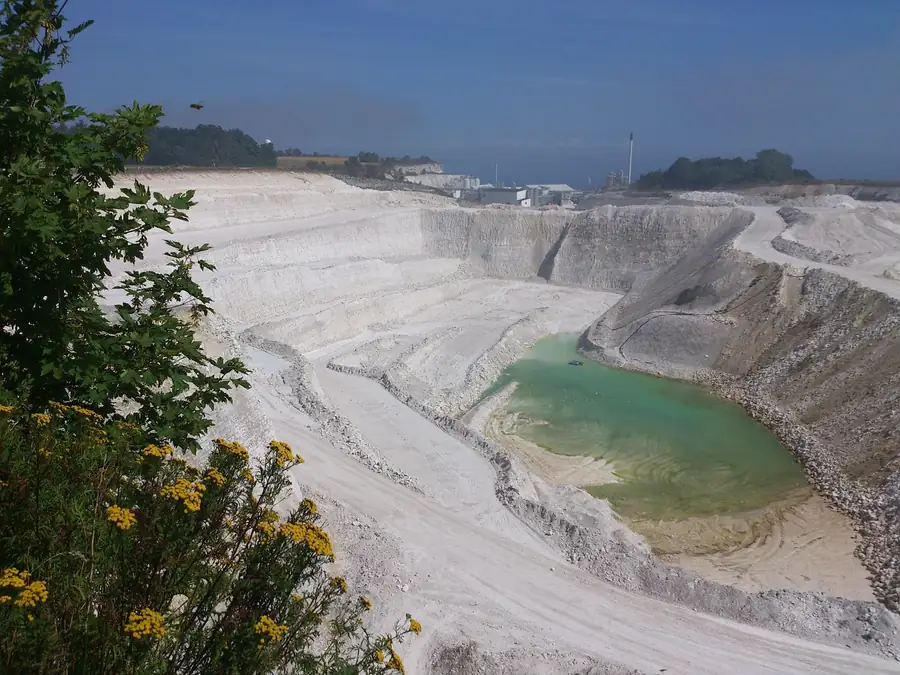
For most houses, chalk is good ground. It does have some quirks, though. Water can dissolve hollows in it over time, and old pits were sometimes backfilled with whatever was around. When a house moves, the roof often shows it first: a ridge line that dips, a crack opening up where the roof meets a wall, a chimney that has started to lean, or tiles that keep slipping on one part of the slope however often they’re refixed.
A roofer can fix the symptom, but shouldn’t guess at the cause. If we see signs that the structure has moved, we’ll say so and suggest a structural engineer before you spend money on the roof. Put a new roof on a house that’s still moving and you’ll end up paying for it twice.
Planning: Dartford Borough Council, Gravesham or Ebbsfleet Development Corporation?
For most roof work you don’t need planning permission at all. Replacing tiles, re-bedding a ridge or renewing a valley in matching materials is repair. Permission comes in when the work changes how the house looks or adds to it, and this is where the area gets confusing.

Old Swanscombe and Greenhithe are in the Borough of Dartford, and Dartford Borough Council is the planning authority. Greenhithe’s old village is one of the six areas on Dartford Borough Council’s list of conservation areas, first designated in 1975 and enlarged in 1998, with an Article 4 direction on top. Swanscombe has no conservation area, but its parish church of St Peter and St Paul is Grade I listed, and any listed building needs consent for work that alters its character.
The new neighbourhoods are different. Since July 2015 the Ebbsfleet Development Corporation has decided planning applications inside its own area, which takes in Castle Hill, Ebbsfleet Green and Whitecliffe on the Dartford side and Springhead Park on the Gravesham side. Its powers were widened in April 2026 by the Levelling-up and Regeneration Act regulations that amended its planning functions order. So a dormer at Castle Hill goes to the corporation, not the council. Building Regulations are a separate system and still go through council building control or a registered approver. Some newer estates also have covenants or estate rules covering rooflights and solar panels, so it’s worth checking your deeds too.
What roof work costs in Greenhithe, Swanscombe and Ebbsfleet in 2026
These are our own 2026 guide prices, including VAT. Your fixed price comes after a free survey.

- Refixing or replacing a few slipped tiles or slates: £180 to £450
- New dry verge on one gable of a 2000s or newer house: £350 to £900
- Re-bedding or dry-fixing a ridge: £450 to £1,200
- Re-lining a valley shared with next door: £600 to £1,600
- Repointing a shared chimney stack and renewing the flaunching: £650 to £1,900
- Full re-roof, Victorian or Edwardian mid-terrace in concrete tile: £8,000 to £11,500
- Full re-roof, the same terrace in natural slate: £10,000 to £14,500
- Full re-roof, semi: £10,500 to £16,000
- Full re-roof, detached house: £14,000 to £24,000 or more
Three things push prices up locally. Narrow terrace fronts and rear passages in Swanscombe can make scaffold awkward. Three-storey townhouses, common at Ebbsfleet, need taller scaffold than a two-storey house, which can add several hundred pounds. And in the Greenhithe conservation area, matching the original slate or clay tiles costs more than a modern equivalent. Whoever you ask to quote, get the tiles, ridge, flashings, scaffold and waste listed separately, so you can compare like with like.
Book a free roof survey in Greenhithe, Swanscombe or Ebbsfleet
Frequently asked questions
Is Swanscombe in Dartford or Gravesham for planning?
Dartford. Swanscombe and Greenhithe share one civil parish, Swanscombe and Greenhithe Town Council, and both sit in the Borough of Dartford. The exception is land inside the Ebbsfleet Development Corporation's area, which takes in Castle Hill, Whitecliffe (the old Eastern Quarry) and Ebbsfleet Green. There the corporation decides planning applications. Gravesham only comes into it on the Northfleet side of Ebbsfleet, such as Springhead Park.
Is my Castle Hill or Ebbsfleet Green house still covered by NHBC?
Possibly, but check the date. NHBC Buildmark runs for ten years from legal completion, not from when the estate was finished. Redrow's first Ebbsfleet Green homes were completed in December 2016, so the earliest ones reach ten years in December 2026. Castle Hill's first phase was finished by 2019. Your Buildmark certificate gives the exact date. Before it runs out, report any roof defect to the builder or NHBC rather than paying a roofer to fix it.
Do I need permission to re-roof a house in the Greenhithe conservation area?
Not usually for like-for-like work, but more care is needed than elsewhere. Greenhithe is one of six conservation areas in Dartford borough, first designated in 1975 and extended in 1998, and it carries an Article 4 direction. Swapping slate for concrete tiles, adding rooflights on the street side or changing the ridge line can all need consent there. Ask Dartford Borough Council's planning team before you change anything that alters how the roof looks.
How much does a new roof cost in Greenhithe or Swanscombe in 2026?
As a guide, a full re-roof on a Victorian or Edwardian terrace runs from about £8,000 in concrete tile to £14,500 in natural slate, including VAT. A semi is usually £10,500 to £16,000 and a detached house £14,000 to £24,000 or more. Smaller jobs are far cheaper: refixing a few slipped tiles is around £180 to £450, and a new dry verge on one gable of a 2000s house is about £350 to £900.
Want a Dartford roofer to look at yours?
A roofer will come out, check it from the loft and the outside, and give you a written price. Dartford, Crayford, Bexley, Swanley and nearby.