
14 October 2026
What A New Roof Costs In Dartford In 2026, House By House
Full re-roof prices in Dartford for 2026: Victorian terraces, 1930s semis, postwar estates and Ebbsfleet new builds, plus what a proper quote should list.
Strip the roof off a typical Dartford house and the tiles turn out to be one of the smaller numbers on the bill. On a mid-terrace in the streets around the town centre, the covering itself might be a quarter of the total. Scaffold, labour, the skip, new underlay, battens, lead and the ridge make up the rest. That is why a new roof in Dartford costs very different amounts depending on the house it sits on, and why a Victorian terrace with no side access and a chimney on each party wall can cost more than a bigger 1960s semi with a plain gable. This guide sets out what full re-roofs are costing in Dartford in 2026 for each of the main house types in the borough. All figures are approximate, include VAT and assume nothing nasty under the tiles.
What a new roof costs in Dartford: the 2026 price bands
Here are the ranges we are quoting this year. Treat them as a starting point for a conversation, not a fixed price. Two houses on the same street can sit at opposite ends of a band.

| House type | Typical 2026 re-roof price (inc. VAT) |
|---|---|
| Victorian or Edwardian mid-terrace, concrete tile | £8,000 - £11,500 |
| Victorian or Edwardian mid-terrace, natural slate | £10,000 - £14,500 |
| 1930s semi with a hipped roof | £10,500 - £16,000 |
| Interwar bungalow, no dormers | £10,000 - £15,500 |
| Postwar semi with a plain gable, concrete tile | £8,500 - £12,500 |
| 2000s-2010s new build, where a full re-roof is genuinely needed | £9,000 - £14,000 |
| Detached house or chalet bungalow with dormers | £14,000 - £24,000+ |
Each figure covers stripping the old roof, new membrane and battens, a new covering, ridge and verge detailing, leadwork where the old lead is finished, scaffold and waste. If you want to know what the work involves day to day, our re-roofing service in Dartford walks through it from survey to sign-off.
Victorian and Edwardian terraces around the town centre
The older streets either side of the High Street and up towards West Hill are mostly two-storey brick terraces from the late 1800s and early 1900s. Many were roofed in Welsh slate. A lot have since been re-covered in concrete tiles, sometimes in the 1970s, which means that covering is now getting tired as well.
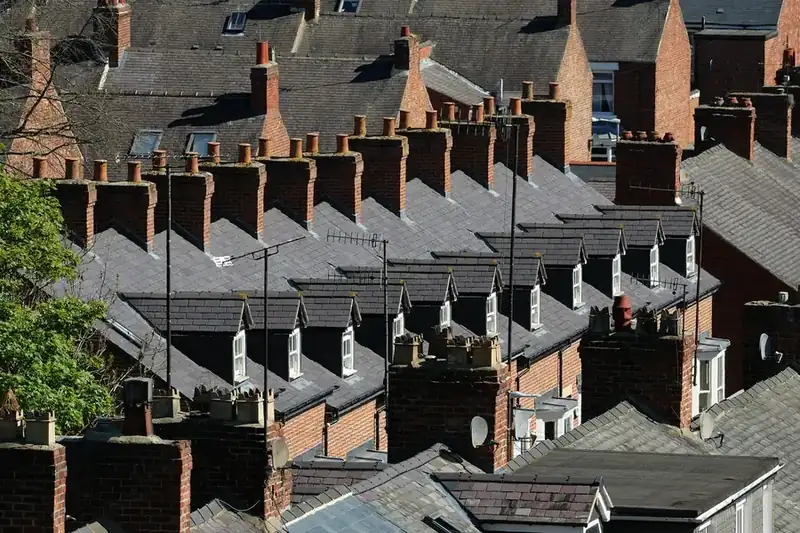
These roofs are small, so why aren’t they cheap? Access is the first reason. There is rarely a side passage, so every old slate, every bag of mortar and every bundle of battens comes through the house or over the front. Scaffold usually stands on the pavement, and Kent County Council has to licence it. Then come the chimneys. A shared stack has two sets of flashings and often a soaker detail into next door’s roof, and the junction where your new roof meets their old one has to be built carefully.
Going back to natural slate costs roughly £2,000 to £3,000 more than concrete on a mid-terrace. It is heavier work to fix and the material costs more. Concrete is the cheaper choice, but it is noticeably heavier than slate, so a roofer should check the rafters can carry it before recommending it. A rear outrigger, the two-storey back addition many of these houses have, is a second small roof with its own valleys and typically adds £1,500 to £3,000.
Interwar semis and bungalows in Wilmington and Joyden’s Wood
South of the town the housing changes. Wilmington has plenty of 1930s semis with bay fronts and hipped roofs, and Joyden’s Wood grew up as an estate of interwar bungalows and chalets on land sold off from the old woodland, with more houses added after the war.
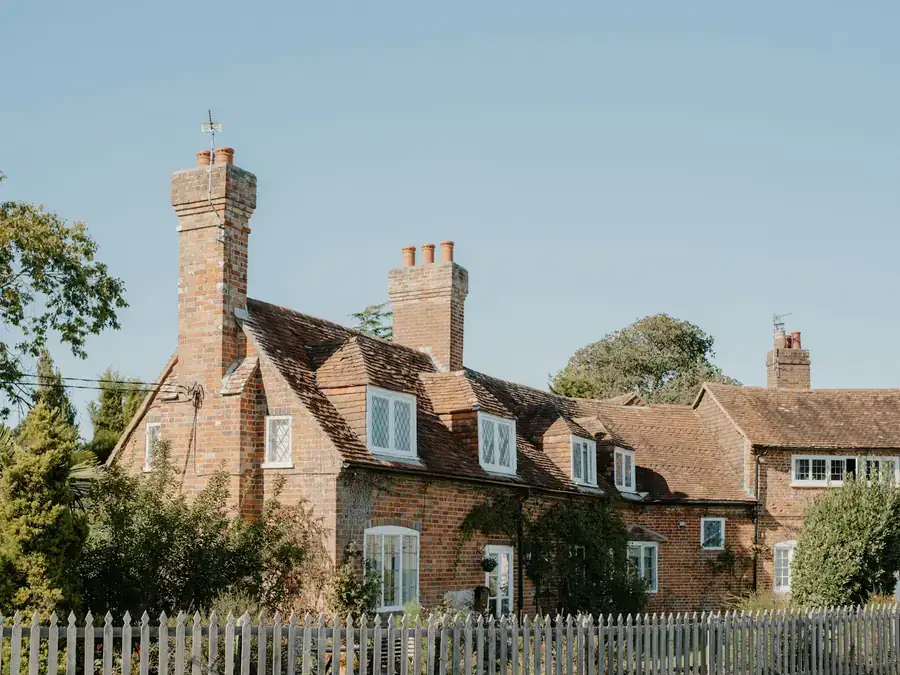
A hipped roof costs more than a gable roof of the same size. Every hip needs cut tiles along both sides and a hip line that is fixed and sealed from eaves to ridge. A typical 1930s semi has two or three hips plus a small roof over the bay, which is why it sits higher than a postwar semi in the table. Many also still have their original clay plain tiles, laid over no felt at all, and matching clay is dearer than concrete interlocking tiles. Some owners switch to a clay-look concrete tile to save money. That is fine outside a conservation area, as long as the timbers are checked first.
Bungalows have a bigger roof than their size suggests. All the floor space sits under one roof, so the area to strip and re-cover is often larger than on a two-storey semi. The good news is that scaffold is lower and simpler. Chalet bungalows with dormers are a different job altogether, and they are the ones that push past £20,000.
Postwar homes on Temple Hill and the 1950s-70s estates
Temple Hill was built by the council after the war to rehouse families who had been bombed out, and Clement Attlee opened its first phase in July 1947. Estates of the 1950s, 60s and 70s followed across the borough, many now privately owned.
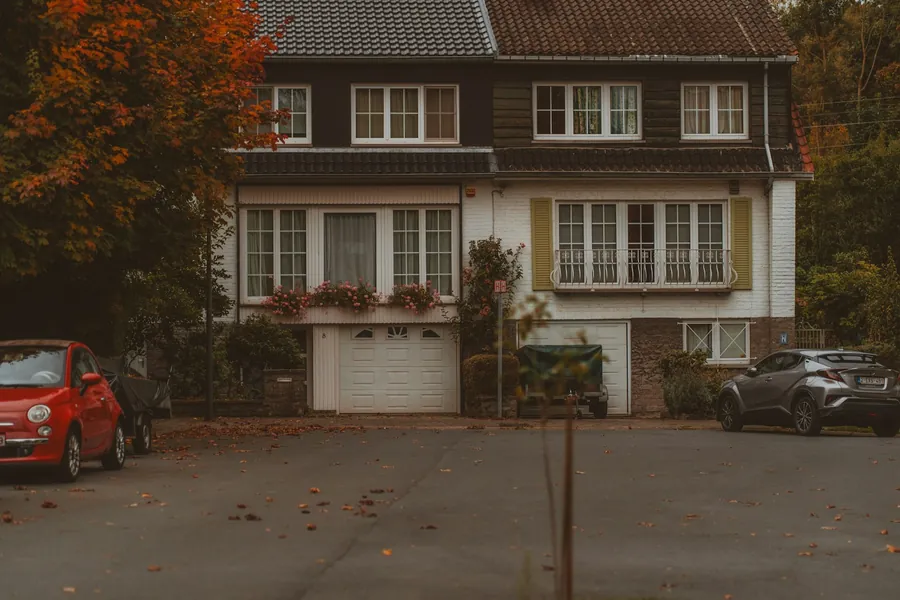
These are often the most straightforward re-roofs in Dartford. Simple gables, modest pitches, concrete interlocking tiles and usually room at the side for a skip. Many original roofs are now 50 to 70 years old, and the giveaway is usually tiles that have gone soft and flaky on the surface, or nail fixings rusting through, rather than one dramatic leak.
The thing to watch is asbestos. Homes built or refurbished before 2000 can have asbestos in soffit boards, old felt and cement products around the roof edge. The HSE’s diagrams of where asbestos is found in homes show soffits and fascias among the common spots. If a survey finds asbestos insulating board in the soffits, it has to be removed by a licensed contractor before the new roofline goes on, and that can add a four-figure sum. A good roofer flags this at the survey stage, not halfway through the strip.
Newer homes at Ebbsfleet, Stone and Greenhithe
Thousands of homes went up along the river in the 2000s and 2010s, at Ingress Park, The Bridge, Stone and in the early Ebbsfleet phases. Most are now past their ten-year NHBC cover, and that leads some owners to assume the roof is due.
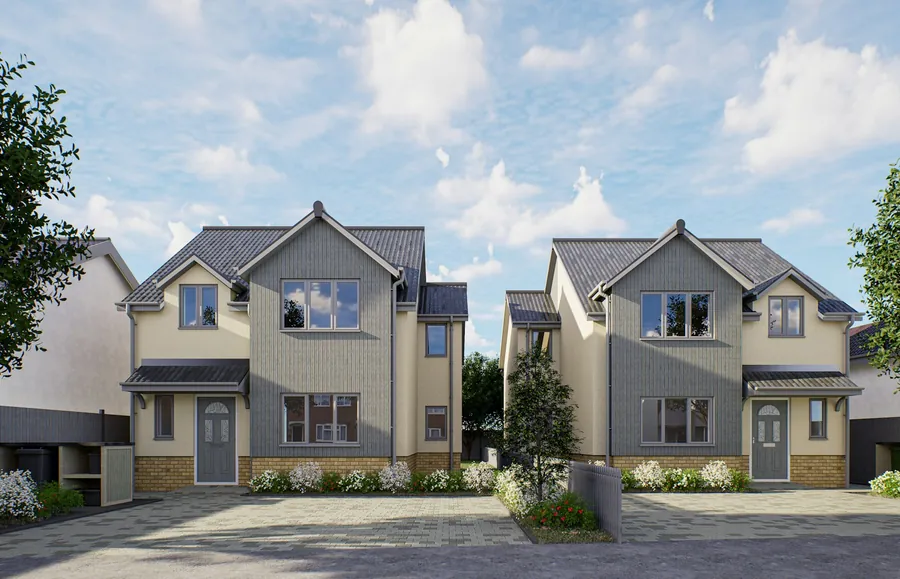
Mostly, it isn’t. The concrete interlocking tiles on these houses should have decades left. What fails at 15 to 25 years is the plastic and the fixings: dry ridge units, verge caps, eaves vents. Those are repairs, priced separately, and paying for a whole new roof to fix them would be money wasted. We’d say the same to a customer face to face.
A full re-roof does make sense in a few cases. A batch of tiles might be failing early, the underlay might have been poorly laid, or someone might want to change the covering. These trussed-rafter roofs are quick to strip and re-cover. The extra cost on the riverside estates comes from three-storey townhouses, where the scaffold goes higher and is dearer to hire, and from estate roads where scaffold and skips need careful placing.
What a full re-roof quote should list, line by line
A written quote for a new roof should read like a shopping list. If it only says “re-roof house, £11,000”, you have no way to compare it with anyone else’s figure.
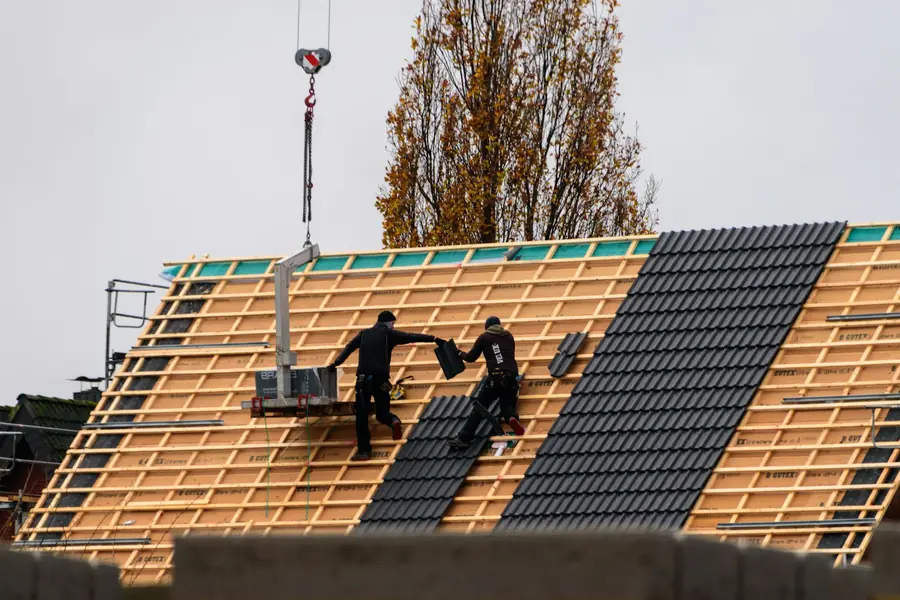
Here’s what we’d expect to see on any re-roof quote, ours included:
- Scaffold as its own figure, with the hire period and any highway licence
- Stripping the old covering and battens, and where the waste goes (skip or grab lorry)
- The breathable membrane, named by product
- New treated, graded battens, never the old ones reused
- The exact tile or slate, its colour and how it is fixed
- Ridge, hips and verges, and whether they are dry-fixed or bedded in mortar
- Leadwork at chimneys, abutments and valleys, with the lead code
- Eaves and ridge ventilation, plus any loft insulation top-up
- The guarantee: length, what it covers and whether it is insurance-backed
- Whether VAT is in the price
A full re-roof also counts as building work under the Building Regulations, so the quote should say who is handling sign-off. A roofer registered with a competent person scheme can self-certify. If not, an application goes to the council, and Dartford Borough Council’s building notice route is the usual way to do it for a house.
What moves a Dartford re-roof price up or down
The bands above move for reasons that are easy to spot once you know them.
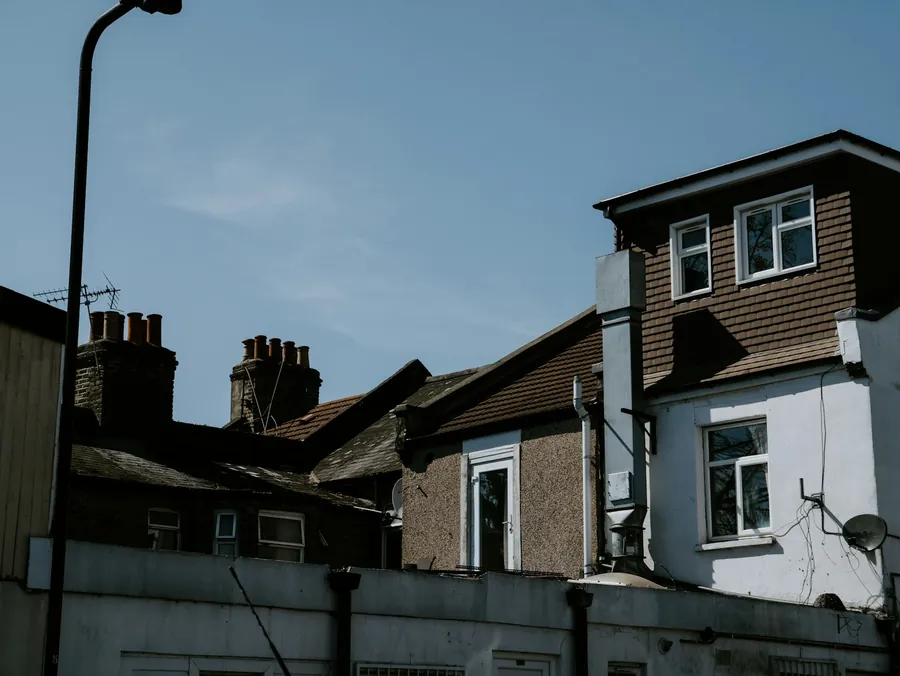
Anything that breaks up a roof slope adds time. Dormers, rooflights, valleys and chimney stacks each need their own flashings and cut tiles, so two roofs of the same area can be thousands apart. It’s also worth asking whether a chimney you no longer use should come down below the roofline while the scaffold is up. That costs more at the time, but it removes a maintenance job for good.
Rotten timber is the cost nobody can promise until the old tiles are off. A fair quote will give a rate per metre for replacing rafters, or for adding boarding, rather than a vague “extras may apply”. Clay or slate in place of concrete adds money. So does a steep pitch, a tight site or an insulation upgrade the loft needs once the roof is opened.
From the re-roofs we have priced across Dartford, the gap between the cheapest and dearest quote on the same house usually comes down to scaffold, leadwork and the junction with next door, not the tiles. Before you sign, check the roofer is vetted, for example through TrustMark’s homeowner search, and get two or three itemised quotes. If your roof might only need fixing, our guide to roof repair costs in Dartford prices the common jobs one by one.
Frequently asked questions
How much is a new roof on a Victorian terrace in Dartford?
As a rough guide for 2026, a mid-terrace re-covered in concrete tiles comes to about £8,000 to £11,500 including VAT, and natural slate about £10,000 to £14,500. An end-terrace, a rear outrigger or a chimney that needs rebuilding all push it higher. Your own figure comes after a survey.
Does my Ebbsfleet or Greenhithe new build need a new roof yet?
Almost certainly not. Concrete interlocking tiles on a house built in the 2000s or 2010s have decades left in them. What tends to fail at this age are dry-fix ridges, plastic verge caps and loft ventilation, which are repairs rather than a full replacement.
If I own one half of a semi, can just my side get a new roof?
Yes, and it happens all the time. The roofer has to make a neat, watertight junction along the party wall line where your new tiles meet next door's old ones. Expect that detail to be priced as its own line, and tell your neighbour before the scaffold goes up.
Is VAT charged on a full re-roof?
Yes. Replacing the roof on an existing house is normally charged at the standard 20% rate. Every price in this guide includes it, but check whether a quote you are comparing does, because leaving it off makes one firm look a fifth cheaper than it is.
Want a Dartford roofer to look at yours?
A roofer will come out, check it from the loft and the outside, and give you a written price. Dartford, Crayford, Bexley, Swanley and nearby.