
23 November 2026
Conservatory Roof Replacement In Dartford: Solid Tiled, Glass Or Polycarbonate, Building Regs And 2026 Costs
Conservatory roof replacement in Dartford: 2026 prices for polycarbonate, glass and solid tiled roofs, when building control is needed, and which roof to pick.
A conservatory roof replacement in Dartford usually costs somewhere between £2,200 and £15,000 in 2026. Polycarbonate sits at the bottom of that range, a modern glass roof in the middle, and a solid tiled roof at the top. Most people looking at this have the same complaint. The room was lovely for a few weeks in spring, then too hot to sit in by July and too cold to use from November. Across the Dartford area, a lot of these conservatories went on the back of interwar semis and 1970s and 80s estate houses in the 1990s and 2000s, so plenty of the original roofs are now 20 to 30 years old. This guide covers what each type of roof costs, which one actually solves the hot-and-cold problem, when Dartford Borough Council’s building control need to be involved, and whether the frame you already have can carry a heavier roof.
Why Are So Many Dartford Conservatories Getting New Roofs?
Because the original roof has usually done its time, and the room has never worked as a room. A typical 1990s conservatory has a 16mm or 25mm polycarbonate roof that has gone cloudy, rattles in the rain and lets heat through in both directions.
North-west Kent makes the summer problem worse. The Thames side of the county gets roughly half the UK’s average rainfall and long, bright summers, so a south-facing conservatory in Wilmington, Bexley Park or out towards Greenhithe can turn into a greenhouse by lunchtime. In winter, the same thin roof loses heat as fast as the radiator puts it in.
The usual signs that it’s time:
- Yellowed or green-stained polycarbonate sheets - UV has broken them down and they won’t clean up
- Drips at the ridge or along the box gutter - the seals and gaskets have perished
- Condensation running down the inside on cold mornings
- Glazing bars that have dropped or bowed
- A room that sits empty for six months of the year
If the frames, base and walls are sound, a new roof is far cheaper than knocking it down and starting again. If they aren’t, a new roof on top won’t fix them. More on that further down.
How Much Does A Conservatory Roof Replacement Cost In Dartford?
For a typical 3m x 3.5m lean-to or Victorian-style conservatory, expect roughly £2,200 to £5,000 for new polycarbonate, £3,900 to £9,000 for glass and £6,500 to £15,000 for a lightweight solid tiled roof. These are 2026 ranges including VAT, worked out from current UK cost guides (Checkatrade, BestBuilders and MyJobQuote) with the usual uplift for London and the South East.

| Roof type | Typical Dartford price, 2026 (inc. VAT) | Time on site |
|---|---|---|
| Polycarbonate, like for like | £2,200 - £5,000 | 1 - 2 days |
| Glass (solar control, self-cleaning) | £3,900 - £9,000 | 2 - 3 days |
| Solid tiled, small (about 3m x 3m) | £6,500 - £10,000 | 4 - 6 days |
| Solid tiled, medium (about 4m x 4m) | £10,000 - £14,500 | 5 - 7 days |
| Solid tiled, large or P-shaped | £13,500 - £17,000+ | 6 - 8 days |
What goes into a solid tiled roof price
On a mid-sized tiled roof, the money splits roughly like this:
- Roof system (aluminium or timber frame, insulation, tiles, ridge and fascias) - about 45-55%
- Labour - about 25-35%, usually a team of two or three, with tradespeople in the South East typically charging £180 to £300 per person per day
- Plastering and internal finish - about 8-12%
- Stripping and disposing of the old roof - about 5%
- Building control fee - a few hundred pounds, depending on the council’s fee table
What makes the price go up or down
- Shape - a lean-to is the cheapest to roof. Victorian bays, gable fronts and P-shapes take longer and waste more material.
- Access - many Dartford terraces and semis have no side path, so everything comes through the house.
- Roof windows - £600 to £1,400 each if you want light back into a tiled roof.
- Frame or base strengthening - £800 to £2,500 if the existing structure can’t take the weight.
- Electrics - spotlights or a ceiling fan in a new solid ceiling need an electrician.
- Gutters - a new roof is a good time to swap a tired box gutter and downpipe.
Solid Tiled, Glass Or Polycarbonate: Which Roof Should You Choose?
If you want a room you can use all year, go solid. If you mainly want the old roof replaced and the light kept, modern glass is the better middle ground. Polycarbonate only makes sense when budget is the main concern, or the conservatory is used as a garden room and not lived in.
| Polycarbonate | Glass | Solid tiled | |
|---|---|---|---|
| Typical cost | Lowest | Middle | Highest |
| Summer heat | Poor | Fair with solar-control coating | Good |
| Winter warmth | Poor | Fair | Good (insulated to modern standards) |
| Rain noise | Loud | Quiet | Very quiet |
| Light | Diffused, cloudy with age | Clear | Lower, unless you add roof windows |
| Expected life | 10 - 20 years | 25+ years | 30+ years |
| Building control | Not usually | Not usually | Almost always |
A few things the table leaves out:
- Polycarbonate weighs very little and fits the existing glazing bars, which is why it’s quick and cheap. It also goes cloudy again in time.
- Glass roofs now come with coatings that reflect a good share of the sun’s heat and help rain wash dirt off. They are heavier than polycarbonate, so the roof structure has to be rated for them.
- Solid roofs come in two main forms. Lightweight tiled systems use composite or synthetic tiles over an insulated frame. A “warm roof” built with real timber and concrete or clay tiles is heavier, and closer to building a small extension.
There is also a hybrid option worth knowing about: a solid roof with a glazed lantern or two large roof windows. You get most of the insulation and keep a bright room.
Which Roof Actually Fixes A Conservatory That’s Too Hot Or Too Cold?
A solid insulated roof is the only one that properly fixes both ends of the year. Glass with a good solar-control coating helps a lot in summer but still loses more heat in winter than an insulated ceiling.
It comes down to glass. A conservatory has far more glass for its size than a normal room, and most of that glass is overhead, where the sun hits it hardest. Replace the overhead glass with an insulated ceiling and the walls of windows that are left behave like a normal room’s windows. Under Part L of the Building Regulations, a new solid roof on an existing home is expected to reach a U-value of around 0.15 W/m²K, which means a lot of insulation. The leading lightweight systems advertise that figure, and building control will want to see it.
A new roof won’t fix everything, though. These still matter:
- Your side frames - single-glazed or failed double-glazed units will still leak heat
- The dwarf wall - many 1990s bases have little or no insulation
- The floor - a bare concrete slab with tiles on it will always feel cold underfoot
- Ventilation - a tiled roof still needs trickle vents or opening windows, or condensation moves to the side glass
If the side frames are failing too, it’s worth pricing a full rebuild against a new roof, because you may end up paying for most of one anyway.
Do You Need Building Regulations Approval For A Solid Conservatory Roof?
Yes, almost always. A conservatory is only exempt from building regulations while it stays a conservatory, and a solid tiled roof usually ends that.
The Planning Portal’s building regulations guidance for conservatories says an exempt conservatory is built at ground level, under 30 square metres, separated from the house by external-quality walls, doors or windows, and has its own heating with separate controls. Councils add that a large share of the roof has to be glazed or translucent. Swap that roof for tiles and the exemption goes. Local authority building control guidance across England treats a solid roof replacement as work that needs approval, because the frame and base were never designed for the extra weight, and because the roof now has to meet insulation standards.
What building control will normally want to check:
- That the base and foundations can carry the extra load
- That the frames, or new posts and a ring beam, can carry the roof
- The insulation, to hit the U-value for a new roof
- Fire safety, if the roof is close to a boundary
- Ventilation and condensation control
Who to apply to in Dartford, Swanley and Hextable
Most of the area is covered by Dartford Borough Council’s building control service. Swanley, Hextable and Crockenhill fall under Sevenoaks District Council instead, which runs its own building control team. Either way, you can also use a registered building control approver, and many lightweight roof makers have a route already set up for their systems. Whoever does the work should say clearly in the quote who is applying and that the fee is included.
Don’t take the doors out
People often want to remove the patio doors between the house and the conservatory once the roof is solid. That changes things again. Without external-quality doors separating it, the conservatory is legally part of the house, and the whole space has to meet the energy rules for an extension. Any new structural opening also needs approval. It can be done, but it should be planned and approved as part of the job, not knocked through afterwards.
What about planning permission?
Usually not needed if the footprint stays the same and the conservatory went up under permitted development. The Planning Portal does say a change that significantly alters the roof’s structure or appearance may need permission. Flats and maisonettes have no permitted development rights, and if your home is listed or in a conservation area, talk to the council before choosing a tiled roof.
Can Your Existing Conservatory Take The Weight Of A Tiled Roof?
Often yes for a lightweight system, sometimes no for a heavy one, and only a proper survey will tell you which applies to yours. This is the question that decides whether the job is a roof swap or something bigger.
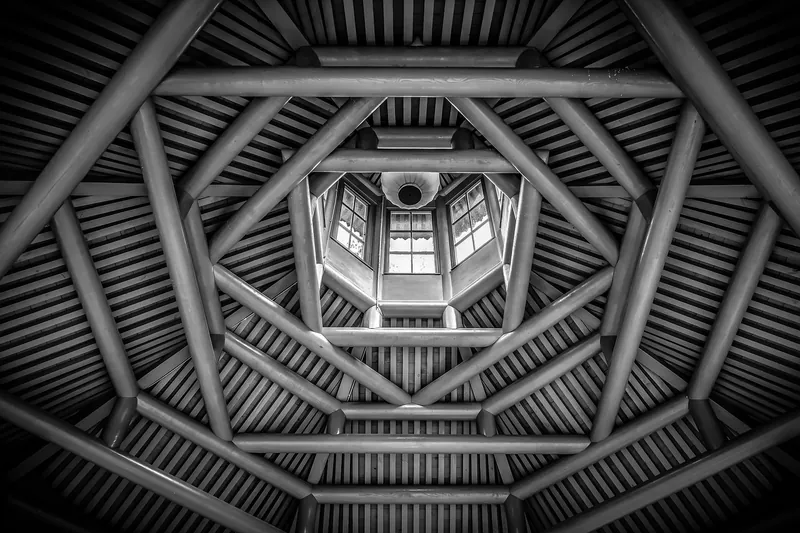
Polycarbonate weighs only a few kilos per square metre. Lightweight tiled systems are typically quoted at roughly 38 to 46 kg per square metre including the frame and insulation. That’s far heavier than what went before, and the extra load runs down through the uPVC frames into the dwarf wall and the foundations. uPVC window frames are not designed to hold a roof up, which is why many systems add aluminium posts hidden inside the frame corners, or a ring beam that spreads the load.
Before anyone quotes, they should be looking at:
- Cracks in the dwarf wall or the base - these point to movement that a heavier roof will make worse
- How deep the foundations are - some DIY and budget conservatories sit on very shallow footings
- Ground conditions - much of the Dartford area is on chalk, with clay and river gravels nearer the Darent and the Thames, and old deneholes turn up in places
- The frames - are they level and square, and can posts go in at the corners?
- Where the new roof meets the house wall - a solid roof often needs a higher wall plate and a lead flashing chased into the brickwork
If the base fails these checks, adding a heavy roof is the wrong move. A rebuild on proper foundations will cost more, but it’s the job that will last.
What Hidden Costs Turn Up On A Conservatory Roof Job?
The roof itself is rarely the surprise. The surprises are in the making good, the electrics and the bits of the old structure nobody could see until the roof came off.
Ask about these before you sign:
- Plastering and decorating - most solid roof quotes include plastering, but not painting, which is usually £200 to £500 for the ceiling and touching up
- Lighting - an electrician to add spotlights, usually £300 to £800
- Rotten wall plate or timber at the house wall - priced once it’s opened up
- Replacement side frames if one or two are found to be failing - from a few hundred pounds per unit
- Blinds - roof blinds on an old glass or polycarbonate roof can’t be reused on a solid one
- Skip or waste removal, if it isn’t in the quote
- Building control fee, if the installer hasn’t included it
How to save money without cutting corners
- Keep the frames if they’re sound - only replace what has actually failed
- Pick a lean-to style ceiling where you can, as it’s simpler to build than a hipped Victorian shape
- Do the decorating yourself once the plaster is dry
- Book in late autumn or winter, when conservatory installers are often quieter
- Get three itemised quotes, so you can compare like with like
What not to do: don’t let anyone talk you into “just tiling over” the old roof without a survey, and don’t skip building control. A buyer’s solicitor will ask for the completion certificate when you sell.
Does A Solid Roof Add Value, Or Should You Build An Extension Instead?
A new roof adds value mostly by turning a room nobody uses into one that counts as living space. Buyers notice the difference straight away. An unusable conservatory is often seen as a cost rather than a feature.

Here’s how the options stack up:
- New polycarbonate roof (£2,200 - £5,000) - tidies it up for a sale, adds little in comfort
- Glass roof (£3,900 - £9,000) - nicer to use for more of the year, keeps the bright conservatory feel
- Solid tiled roof (£6,500 - £15,000+) - the room becomes usable year round, usually the best value per pound spent
- Rebuild as a proper single-storey extension - often £30,000 or more for a similar footprint, plus planning in some cases
For most families on a Dartford semi or terrace, a solid roof on a sound conservatory is usually the best buy. You get most of the benefit of an extension for a fraction of the cost, as long as the base and frames are good. Hold on to the building control certificate and the roof system’s warranty papers, as a buyer’s surveyor will ask for both.
How Do You Choose The Right Installer In Dartford?
Pick someone who surveys before quoting, puts everything in writing and handles building control. A conservatory roof sits on the line between roofing and building work, so you want someone comfortable with both.

What to check:
- They inspect the base, frames and house wall before giving a price, not just measure the roof
- The quote names the roof system, the tile, the insulation and the U-value
- They tell you whether building control is needed and who is applying
- The quote says what’s included: plastering, electrics, gutters, waste and making good
- Reviews on Google, Checkatrade or Trustpilot that mention conservatory roofs specifically
- A written workmanship guarantee and the manufacturer’s warranty on the roof system
- At least three quotes, so you can see who has left things out
Be wary of anyone who quotes over the phone from photos, wants a large deposit before ordering anything, or tells you building control “isn’t needed for a roof”. If you’re also weighing up work to the main roof of the house, our guide to planning permission and building regs for re-roofing in Dartford explains when the main roof needs approval. Our re-roofing service page covers how a full roof replacement is planned and priced.
So Which Roof Should You Go For?
If the base and frames are sound and you want to use the room all year, a lightweight solid tiled roof with one or two roof windows is the one we’d pick. It costs more up front, but it’s the only option that deals with both the summer heat and the winter cold, and it adds usable space to the house.
Choose glass if keeping the light matters more than winter warmth, or if your base can’t carry a tiled roof without major work. Choose polycarbonate only when budget is tight or the conservatory is going to stay a sunroom. Whatever you choose, get the structure surveyed first and make sure building control is part of the plan for a solid roof. Swanley and Hextable homeowners apply through Sevenoaks rather than Dartford, but the rules are the same.
Frequently asked questions
How much does a conservatory roof replacement cost in Dartford?
As a 2026 guide for north-west Kent, swapping old polycarbonate for new polycarbonate costs about £2,200 to £5,000. A modern solar-control glass roof is roughly £3,900 to £9,000. A lightweight solid tiled roof is usually £6,500 to £15,000 or more, depending on size and shape. Strengthening the frame or base can add £800 to £2,500, and each roof window in a tiled roof adds £600 to £1,400.
Does a tiled conservatory roof in Dartford need building control sign-off?
Almost always, yes. A conservatory is only exempt from building regulations while it stays mostly glazed, under 30 square metres, at ground level and separated from the house by external-quality doors or windows, with its own heating controls. A solid tiled roof means it no longer counts as a conservatory, so building control need to check the frame, the base and the insulation. In Dartford that is Dartford Borough Council's building control team or a registered building control approver. In Swanley and Hextable it is Sevenoaks District Council.
Do I need planning permission for a new conservatory roof in Dartford?
Usually not, if the footprint stays the same and the conservatory was built under permitted development. The Planning Portal notes that a change which significantly alters the roof's structure or appearance may need permission. Flats and maisonettes have no permitted development rights, and listed buildings and conservation areas have tighter rules, so check with the council first in those cases.
How long does it take to replace a conservatory roof?
Most replacements take two to five days on site. A polycarbonate or glass swap is at the quick end. A solid tiled roof takes longer because the inside is boarded and plastered, and the plaster needs a few days to dry before you can decorate. Building control also need to inspect at agreed stages.
Want a Dartford roofer to look at yours?
A roofer will come out, check it from the loft and the outside, and give you a written price. Dartford, Crayford, Bexley, Swanley and nearby.